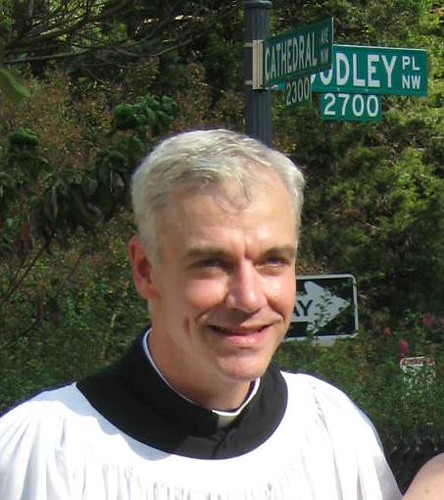
Sunday, April 11, 2010

Different kinds of faith


A sermon for the Second Sunday of Easter, April 11, 2010. The lectionary readings are Acts 5:27-32, Psalm 118:14-29 , Revelation 1:4-8, and John 20:19-31.


One of the great joys of being at All Souls is that I get to see the garden almost every day of the week. I get to watch the changes as the seasons unfold.

Especially at this time of the year, some flowers seem to grow stronger and more vibrant. Some weaken and bend. Some become more fragrant and change in a really beautiful way. Some look tough, because they’re supported by others. Some look weak, but really they’re among the more resilient. Some die altogether, and they’re been removed. But others grow older and expand and become somehow much more mysteriously beautiful.

The flowers are a little bit like faith. Faith is not of one kind. Faith responds differently over time. The Gospels make that very clear, that there are different kinds of faith, different types of faith and different levels of faith.

We could pick up Saint Paul’s meditation on spiritual gifts when he says, “There are varieties of gifts, but the same Spirit;” and we could add, “And there are varieties of faith, but the same God behind them.”

Some people’s faith depends upon signs. Others believe in Jesus without a sign. Some need miracles. Others don’t. Some have faith that is weak, some strong. Some have shallow faith, some have deep faith. These different kinds of faith can be seen especially when we look at the various reactions to the resurrection. On this second Sunday of Easter, as we continue to reflect on the resurrection and its meaning, we can learn something from the different ways those early disciples came to believe that Jesus had risen from the dead.

Mary Magdalene had faith that took her to the tomb and she saw the risen Lord through her tears.

The two disciples were walking to Emmaus. Their faith led them to extend hospitality to a stranger, and they saw the risen Lord in the breaking of bread.

Some of the disciples were fishing on the Sea of Galilee. Their faith led them back to work, and they saw the risen Lord in the midst of their work, and when they reached land, he made them breakfast.

Later the disciples seemed to lose faith, and fear took over. They were in a room with locked doors, but even through their fear, the saw the risen Lord.

In the Reading from the Acts of the Apostles we hear the fiery faith of Peter before the religious leaders of the day. His faith is so strong enough to break him out of prison and send him right back into the Temple to preach the news of Jesus resurrection.

In the Second reading, from Revelation, there’s the confident and clever faith of John the Divine, whose faith gave strength to the churches who were struggling, and whose faith still gives us hope in the one who is Alpha and Omega, the one who is and who was and who is to come.

And then there is Thomas.

Thomas was a twin. That’s what his name means really. Some have supposed that he may have been the twin brother of Matthew. Earlier in John’s Gospel, when they hear the news their friend Lazarus is dead, it’s Thomas who wants to go with Jesus. Sensing danger and not knowing what’s ahead, Thomas nonetheless has the faith to say, “Let us go with the Lord, so that we may die with him.”

When Jesus is giving his farewell discourse to the disciples, he talks about going down a road and to a place where the disciples will not be able to follow. But it is a place they know. Thomas speaks up and says, “But Lord we don’t know where you’re going.” But Jesus affirms that by knowing him, they know his destination since as Jesus says to them, “I am the Way, the Truth and the Life.”

Thomas sometimes seems more theologically alert than the other disciples, asking the penetrating question, urging Jesus to explain himself. The early church understood Thomas as the author of another Gospel. There is a collection of sayings called the Acts of Thomas, and there is an apocalypse of Thomas. Tradition has it that Thomas sailed to India and spread the Gospel there. After a long life of preaching and working with the poor, he was martyred in India, but Thomas’s body was taken to Edessa, where his relics were an important source of inspiration to the Syrian Church in the 4th Century. A father of Indian and Syrian Christianity, Thomas continues to inspire.

It was not enough for Thomas to hear of the resurrection from Mary Magdalene. It was not enough for him to hear of it from the two who were on the road to Emmaus.

What appears to others like doubt, indecision, even a lack of faith—for Thomas, it was simply HIS faith. It was his way of faith. A way that was willing to struggle, to look for truth deeply, to weight the evidence, and only then, move forward.

Jesus had already appeared to the other disciples. He had breathed on them the very Spirit of God and they were spirit-filled. The shared in the resurrection as it brought them new life and filled them with the very life of God, and began to move them out of the locked room into the world. But Thomas had not been with them. “Unless I see in his hands the print of the nails, and place my finger in the mark of the nails, and place my hand in his side, I will not believe.”

And so, on the eighth day—the day of new creation, the day beyond the seven days of creation, the day of new possibilities and unimagined miracles—Jesus appears again to the disciples.

Peace be with you, Jesus says. And Jesus offers himself—the resurrected body that still bears the wounds, though they are transformed. The Gospel does not tell us whether Thomas actually touched the wounds. There is room for our imagination. In Rembrandt’s great painting of Thomas and Jesus, The Incredulity of St. Thomas, Jesus stands showing the wound in his side. The disciples are amazed and look on with wonder, and Thomas stands back in surprise, in shock. It is Caravaggio’s painting that is much more explicit—darker, more intimate, more shocking really, because in it, Thomas actually places his finger in the wound. As in the Gospel of John itself, some believe without signs, some need signs.

St. Thomas not only stands as the father of Indian and Syrian Christianity, he also stands as a patron for those whose faith does not come easily, with those whose faith includes a measure of doubt, a bit of suspicion, maybe even a little cynicism.

Some may have faith like Mary Magdalene, or the two on the road to Emmaus, or the other disciples, but some may struggle. May we all know that there is a place for us in the garden, but especially may those who doubt, remember Thomas. Thomas eventually was brought into the presence of the Risen Christ who took his hand, brought it to his side, and said, “Look, believe and live.”

Christ is risen for the tearful. Christ is risen for the bold. Christ is risen for those who fear. He is risen for those who doubt. He is risen for us all. Alleluia.

In the name of the Father, and of the Son and of the Holy Spirit. Amen.

Sunday, April 04, 2010

Easter Day

Noli me tangere, Fra Angelico, c. 1425-1430.

A sermon for Easter Day, April 4, 2010. The lectionary readings are Acts 10:34-43 , Psalm 118:1-2, 14-24, 1 Corinthians 15:19-26 , and John 20:1-18 .

Last Sunday’s episode of The Simpsons (the animated television program on Fox) had Homer visiting the Holy Land. Once there, he fell into what is called “Jerusalem Syndrome,” and in his case, began to believe that he was the Messiah. I first heard the Jerusalem Syndrome some years ago, just before I visited Israel. A colleague of mine sent me an article about the strange condition with a note on it saying, “I hope this doesn’t happen to you.” The syndrome is one in which a otherwise normally acting and thinking individual leaves his or her home, travels to Jerusalem, and once there, has a kind of break or shift, in which one actually believes that one is someone else—almost always a famous Biblical character. One believes that one is Mary Magadalene, and so roams the streets of modern day Jerusalem, in character. Or one believes that one is Saint Paul, or the Virgin Mary, or… which ever Biblical character your brain suddenly adopts. I’m happy to report that in 1997, I did not fall into Jerusalem Syndrome (though I did hear a voice in the Church of the Nativity … but that’s another story for another sermon).

As odd as Jerusalem Syndrome sounds, there’s one aspect that seems especially true to human nature. Notice that whenever someone undergoes this brief psychotic shift, whether the person is Muslim, Christian, or Jewish, the person always identifies with some famous person from biblical or religious history. It reminds me a little of Shirley MacLaine’s experience with past lives. Ms. McLaine, in past lives, has been “a Japanese geisha, a Moorish girl summoned to cure a fellow countryman of impotence, a suicide in Atlantis, a Toulouse-Lautrec model, an orphan raised by elephants and the seducer of Charlemagne who was subsequently reborn as Swedish prime minister Olof Palme.”

As she explained in a interview a few years ago,“We’re all playing parts,” she insists. “You're acting as a journalist, doing your best, and I'm trying to impress you. That’s what we do throughout our lives, and you’re empowered when you come to terms with it. What’s imagination, what’s real? I don’t know. If you're playing a role, you can rewrite it any way you want.” [Full interview with Andrew Duncan, can be found at Radio Times, Created 8/8/2000 Updated 25/8/2003 Page Address: http://members.fortunecity.com/templarser/duncan2.html ]

Though she may be right that it does feel like we’re simply “playing parts” from time to time—some better actors than others--- it seems to me that the very essence of Christian faith, the freedom we celebrate especially on this day, is the freedom NOT to play a part, but rather, the freedom to be ourselves. It is the peculiar, individual, sometimes not-too-interesting, sometimes more-fascinating-than-any-role-ever-written SELF that Christ touches, baptizes, sanctifies, and raises to new life. He raises us up on the final day, from death to life, but he also raises us up continually in this life, to life lived more abundantly.

Humanity is made holy on the cross. Rather than transform himself into some Greek or Roman god who might summon all the natural forces of the universe and wow the people with special effects, Jesus dies on the cross. But along with the body of Jesus, the power of sin dies on the cross. The power of evil over us, dies on the cross. The power of death, dies on the cross. As St. Paul puts it, “The last enemy to be destroyed is death.” And that enemy meets its end on the cross of Christ.

In life, Jesus touched people as themselves, calling each one to the “better self.” The tax collector was accepted and told to deal honestly with people. The Roman soldier had his place and was told to be honorable. The woman at the well continued her work, but with new integrity and purpose after encountering Jesus. The Syrophoenecian woman would still be seen by some as a foreigner, but she found new identity and strength in being touched by Jesus. Each of the disciples—the famous ones whose names we know, and the ones whose names we don’t know--- each disciples is accepted for who she or he is, and through a relationship with Jesus Christ (through rebirth in God) each one is touched, changed, and raised up.

Today’s first scripture reading is from the Acts of the Apostles. In it, Peter has learned from a vision God gave him. That vision (which you can read about earlier in Acts 10) opens Peter and the followers of Jesus to a fuller vision of God’s Kingdom, accepting accepting non-Jews into the way of Jesus, and putting into place a pattern of acceptance and openness Church (when it is being faithful to Christ) continues in our own context. As Eugene Peterson’s translation of the scriptures puts it in contemporary language, “It's God's own truth, nothing could be plainer: God plays no favorites! It makes no difference who you are or where you're from—if you want God and are ready to do as he says, the door is open. The Message he sent to the children of Israel—that through Jesus Christ everything is being put together again—well, he's doing it everywhere, among everyone.” [The Message, Acts 34-38]

As one Anglican Benedictine has put explains, the great freedom of religious life is the freedom not always to have to stand out and be different. The vow of stability helps one remember that one need not spend so much energy always trying to differentiate oneself, to strive to be better than, or more than, but to remember that God has created each person as “enough.”
Even when he was resurrected from the dead, Jesus is seen in common, human ways. In today’s Gospel he is first encountered not in glowing white, not as a superhero, not as something or someone from another space and time, but rather, he is mistaken for the gardener. In another appearance, he fits in with the fisherman. Along the road to Emmaus he appears as a companion, and as a friend. Near the very end of the Gospel of John, some of the disciples are fishing, and Jesus is appears on the beach. There, he seems almost like a short-order cook, asking everyone how they’d like their fish cooked. (That’s a Jesus I really love, and I bet you anything he knows his way around all the “diners, drive-ins and dives” of the world better than Food Network’s own Guy Fieri!)

This earthiness is echoed in our other readings for this Easter morning.

The Resurrection of Jesus Christ reminds us that the “glory of God is a human fully alive” (Irenaeus of Lyons). Christ rises again in each of us, as our bodies move with the love of God in our world. A tenth century mystic, who began as a politician, eventually moved from being a senator to being a monk, and has been known as Symeon the New Theologian (to distinguish him from an earlier Symeon). Symeon’s poetry underscores the personal aspect of encountering God, the personal ways in which God activates and animates us. He writes

We awaken in Christ's body
as Christ awakens our bodies,
and my poor hand is Christ, He enters
my foot, and is infinitely me.

I move my hand, and wonderfully
my hand becomes Christ, becomes all of Him
(for God is indivisibly
whole, seamless in His Godhood).

I move my foot, and at once
He appears like a flash of lightning.
Do my words seem blasphemous? -- Then
open your heart to Him

and let yourself receive the one
who is opening to you so deeply.
For if we genuinely love Him,
we wake up inside Christ's body

where all our body, all over,
every most hidden part of it,
is realized in joy as Him,
and He makes us, utterly, real,

and everything that is hurt, everything
that seemed to us dark, harsh, shameful,
maimed, ugly, irreparably
damaged, is in Him transformed

and recognized as whole, as lovely,
and radiant in His light
he awakens as the Beloved
in every last part of our body.

With apologies to Homer Simpson, we really have no need for the Jerusalem Syndrome to take us over and turn us into other people. We’re fine just who we are. It’s we-as-we-are that Christ comes to meet, to make holy, and raise to new life.

Alleluia, Christ is risen.
The Lord is risen indeed, alleluia.

Saturday, April 03, 2010

Easter Vigil

The Garden Tomb, Jerusalem

A sermon for the Great Vigil of Easter, April 3, 2010. The Gospel reading is Luke 24:1-12.


Between the draught of last spring and summer, and the blizzards of this winter, several of us thought we would lose one of the little dogwood trees just outside the tower door of the church. Last summer, we nursed them along, pulling hoses and pouring pitchers of water whenever Mother Nature seemed to be otherwise occupied. It seems like they’re going to make it.

Maybe you are like me in watching the trees especially closely this spring—watching them to see if they are really going to pull through. Is a particular misshapen and storm-damaged tree just taking a while to recover from winter shock, or is it dead? For a tree that lost much of itself through storms or pruning, is there some chance of late recovery? With a few straggly trees along the Woodley Place side of the church, the city helped make that decision. They cut down one dying tree and removed another one that seemed beyond repair. And then, a small miracle—the city planted three new trees, staked them up, fertilized them, mulched them, and gave them some municipal equivalent of a blessing.

It’s a tricky business trying to decide whether a tree is dead, and then needs to be removed or replaced, or room cleared for something new to grow. It can be a painful thing. It can change the way things look, the way things feel, even the way we feel, if the tree has become something we’re used to seeing and having near and enjoying. As difficult as it can be to let a tree die and move on, it’s (of course) even more difficult to acknowledge death in such a way that makes room for new life.

But that’s just what happens in this Easter Gospel. Some of the women, Mary Magdalene, another Mary, Joanna, and some of the others, come to the tomb where Jesus has been buried. They find the stone rolled away. They had imagined finding things differently. They had thought they would find the dead body of Jesus.

They had pictured it all differently, and so what they saw was like trying to recover from a storm. Are their eyes playing tricks on them? Is this death, or is it not? Or is this a strange kind of death, different from what they had supposed. The angels who stand there break the silence asking, “Why do you look for the living among the dead? He is not here, but has risen.”

But we can understand why the women are there. They are at that odd place between naming death, and being aware of some new kind of life. Sometimes we call this shock. Sometimes it’s denial. Sometimes this awkward time is simply covered up with business or compulsion or fantasy. But the women on that Easter morning, and the other disciples too, for the new few days, (perhaps the next 50 days of Eastertide, perhaps the next two thousand years) will continue to try to understand what it means in God’s creation for some things to die so that others may find new life.

Sometimes ideas need to die. They need to fall away, or be revised, or be drastically changed. Sometimes projects—though they may be loved, even a little bit worshipped—projects need to be dropped. Sometimes attitudes need serious adjustment. They need to die. Sometimes particular jobs, or skill sets, or tasks need to wind down to their logical resting place. Sometimes (though less often than our society supposes) relationships come to an end. Or, perhaps relationships need to be re-negotiated, in order to gain new life and growth.

I have a friend named Al Johnson, who is the rector of St. Michael’s Church in Barrington, Illinois. Al has a somewhat corny, but wonderfully perceptive and faithful way of talking about the most significant relationship in his life. He explains that he’s been married to the same women three times. Three times, but with no divorce. They have an amazing relationship, and now, as Al looks at retiring, I bet he’s soon going to be saying that he’s been married FOUR times to the same women, because as he changes his patterns and habits and values, it’s only natural that some aspects of their (third) marriage will die, so that aspects of their fourth marriage can begin.

We’ve seen death in New Orleans, and we’ve seen death in Haiti. But we’re also seeing signs of new life. In parts of Washington, DC, there has been too much death, but in some places, there are also signs of new life.

What about YOUR life? If you were to be totally honest, if you were to see God face-to-face this holy night, what is it in your own life that really needs to be understood as staying in the cave, that place where history is frozen, where life is stagnant, that place of non-growth?

And at the same time, where might you hear the holy angels of God suggesting you look for new life?

Why do we look the living among the dead? Why indeed?

Faith in Jesus Christ is not so much about accepting historical precepts, or affirming traditional beliefs. Instead, Christian faith that is dynamic and alive and growing is about risking day-to-day contact with the living Christ, who might just lead us into anything!

The risen Christ changed the lives of his family, his friends, and his disciples, and he changes lives still.

May we be filled with the Resurrected Life of Christ and charged with the energy to choose light over darkness, faith over despair, and life over death.

In the name of the Father, and of the Son, and of the Holy Spirit. Amen.

Friday, April 02, 2010

Good Friday

The Crucifixion, workshop of Bonaventura Berlinghieri (ca. 1228-1274)

A brief homily for Good Friday, April 2, 2010. The lectionary readings are Isaiah 52:13-53:12, Psalm 22, Hebrews 10:16-25 , and John 18:1-19:42 .


Some of you are familiar with Evelyn Underhill who was an English writer on mysticism and the spiritual life, who died in 1941. More than being just a writer, she was also a practitioner, a person of deep prayer, and you feel the depth of her prayer through her writing.

In one place (The Light of Christ), she talks about how first appearances can be deceiving. She talks about how a friend might suggest you check out a particular church—it has beautiful stained glass windows, for instance. And so, you approach this church, but from the outside, all you can see are windows that look pretty much alike—they’re all sort of dull and dark, thick, and grubby. But then, as she describes it, “Then we open the door and go inside—leave the outer world, enter the inner world—and the universal light floods through the windows and bathes us in their colour and beauty and significance, shows us things of which we had never dreamed, a loveliness that lies beyond the fringe of speech.” She goes on to say that this is a little like our understanding of God. We cannot understand God from the outside, but understanding comes when we enter in.

All Souls is a perfect place to begin to understand some of the mysteries of Good Friday. We are that kind of church from the outside—our windows look sort of ugly and uninteresting, until we come in, and then there’s a whole other world going on.

This day is like that. From the outside, it appears to be named incorrectly. After all, what is “good” about an innocent man, a prophet, and healer and teacher, being killed for no reason other than the fear and anxiety of the religious rulers of his day? But from the inside, from the standpoint of faith, we begin to understand that Jesus has given himself on the cross. What may appear on the outside as failure, will be turned into triumph.

The Good Friday perspective is one that can help us through the dark times. Especially when we only see darkness, when we don’t feel God’s presence, when our soul cries out “Why have you forsaken me?” a Good Friday perspective can remind us that if we go through, if we go deeply into, if we allow God to go with us, then we will move from outside, in and things will look different.

With eyes to see clearly, with faith to perceive the true nature of things, a Ninth century writer was able to sing praise on this day. Theodore of Studios wrote:

How splendid the cross of Christ! It bring life, not death; light, not darkness; Paradise, not its loss. It is the wood on which the Lord, like a great warrior, was wounded in hands and feet and side, but healed thereby our wounds. A tree had destroyed us [in the Garden of Eden], a tree now brought us life.

May God give us the faith of Good Friday, faith to see beyond appearances, faith even to enter into death, so that we may be brought to life again.

In the name of the Father, and of the Son, and of the Holy Ghost. Amen.

Thursday, April 01, 2010

Maundy Thursday

Dawn at the Tidal Basin, April 1, 2010

A sermon for Maundy Thursday. The lectionary readings are Exodus 12:1-4, (5-10), 11-14
1 Corinthians 11:23-26, John 13:1-17, 31b-35, and Psalm 116:1, 10-17.


I remember well a particular baptism. We had made our procession. The family of the child to be baptized were all gathered around the font. The children of the church watched closely. We raised a pitcher of water up high and began to let it flow into the font. Whooooooshhhh. And in the split second of silence after the pouring of the water, the brother of the child being baptized looked up and said loudly, “Wow.”

Wow, indeed. Wow, at the miracle and mystery of water. Wow, that ordinary water can be made holy.

Perhaps we have had our fill of water over the last few months—both the frozen kind of water and the raining kind. This morning I watched the sun come up at the Tidal Basin, and I noticed in many places evidence of where the water had overflowed. Water overflows in nature. But water also overflows in church.

At baptism, the water overflows. The baby, child, adult gets wet, but in some ways the moisture never leaves. We reaffirm our baptismal vows, we make the sign of the cross with Holy Water, we receive the sprinkling on certain occasions—all of which remind us that we never really dry off. The water stays on us and in us.

But also in tonight’s ritual, in the washing of feet, water overflows. And this overflowing of water represents love overflowing. The love of God overflows into the life of Christ. The love of Christ overflows into the lives of his followers and friends. And through the mystery of the Holy Spirit, that same love can flow through us into a dry and parched world.

Our tradition at All Souls on Maundy Thursday is that the priest washes the feet of twelve parishioners. This is meant to symbolize Jesus washing his disciples feet. But it should also be understood as a kind of enacted sermon illustration, one for you to imagine yourself in the story. And Christ lives in each one of us, and the call to show love to others in simple, tangible ways does not belong to priests, but to all of us. Though you may not be washing the feet of another, I hope you will be open to how God might be calling you to extend the love of Christ through the world.

Jesus calls it a new commandment and certainly it makes “love of neighbor” more explicit than the first commandments, but what is really new about the commandment to love one another is how we “incarnate” that commandment. What can be new has to do with the multitude of ways that Christ’s love can be shown in our world.

After the washing of feet, we continue with prayers and Holy Communion. After Communion, we process with the Blessed Sacrament to the Mary Chapel, where the Sacrament remains overnight. By allowing the Body of Christ to remain in the Mary Chapel overnight, we recall how, soon after washing his disciples’ feet and sharing the Passover Meal, Jesus and his disciples went into the Garden of Gethsemane to pray.

May the overflowing water of Christ’s love wash us, renew us, and keep us faithful. In the name of the Father, and of the Son, and of the Holy Spirit. Amen.

Monday, March 29, 2010

Our Place on the Way of the Cross

The Procession to Calvary, Pieter Brueghel the Elder, 1564.


A sermon for the Sunday of the Passion: Palm Sunday, March 28, 2010. The lectionary reading are Luke 19:28-40, Isaiah 50:4-9a, Psalm 31:9-16, Philippians 2:5-11, and Luke 23:1-49.

On Friday night we walked the Stations of the Cross, using the traditional prayers and readings, and making our way around these ceramic stations within our building. Each one (of course) represents a particular spot along the way through Jerusalem, as Jesus made his way toward Calvary, the hill where he would be crucified.

Last Friday, as it was so beautiful outside, I began wishing that our stations were like the ones in Montreal, at the Oratory of St. Joseph, high atop Mount Royal. If you’ve ever visited, maybe you’ve seen their Gardens of the Way of the Cross. There they have sculptures representing each of the Stations of the Cross, but if as you navigate them, you’re also walking through beautiful gardens with at view of Montreal.

Those gardens play a role in a 1989 movie called, “Jesus of Montreal.” The story involves a priest or abbot who hires an actor to play the part of Jesus and to update the monastery’s annual passion play. He tells the actor who will play Jesus to go and hire the other actors and then reinterpret the story, update it, make it big, so that more people will visit. And that’s what the actor-playing-Jesus does. He “calls” his friends to follow him in this project. He rescues a woman from an almost abusive working situation, he invites others out of their degrading work, and as the story goes on, we realize that it’s basically the Gospel re-told. The actor playing Jesus acts like Jesus as he calls people to follow him, and each person is changed in some way when they respond to that call.

Whenever I watch or think about that movie, I begin to imagine who in the cast I might relate to. Like when I walk or pray the Stations of the Cross, I sometimes meditate on which one of the characters who appear in the story are like me? If I were in their place, what would I have done? Would I have acted more quickly, or more boldly… or less faithfully?

We hear about some of those people in the Passion according to St. Luke. Are there any you especially relate to? Are there any who seem familiar or remind you of someone?

I doubt many identify with Pontius Pilate, but there may be times when we feel a little like Barabbas—we’ve escaped some blame or punishment that might have been due to us. We might identify with the crowd—the crowd that is so easily caught up in the mood of the moment, caught up in abstract understandings of “justice” or “holiness” to the extent that it loses all sense of right or wrong. Simone of Cyrene simply walks into town and is sort of thrown into things. But I bet that when he hears the whole story, he’s probably glad he was in the right place at the right time and able to help Jesus in some small way. We have perhaps sometimes been like the women of Jerusalem, the ones who mourn and grieve, who get caught up in their sentiment for Jesus, but miss the practical implications of their feeling. The soldiers are simply doing their job. The criminals following their fate—except for the one who asks Jesus to remember him, to pray for him, to ask God to show him mercy. Other accounts add other characters—the woman who wipes the forehead of Jesus, Mary and John, the other disciples, the others who look on. And so it is tempting to imagine who we would be, if we were there. It’s tempting to imagine how we might respond, if we were there.

On this day and on Good Friday, we often recall the words of that great spiritual, “Were you there?”

Were you there when they crucified my Lord?
Were you there when they nailed him to the tree?
Were you there when they pierced him in the side?
Were you there when they laid him in the tomb?

Well the faithful answer, really, is “No. We weren’t there.” We can meditate upon those events, we can re-member them, we can perhaps even be changed by them, but the real question for us now, for us on this day, and especially as we begin this holiest of weeks is, “Are you HERE?”

Are you here, where Christ is alive again and reigns not from a tree, but from highest heaven and from within the hearts of all the faithful.

Are you here? Where miracles continue as bread and wine become body and blood and we are made one people in spite of all that might separate us, in spite of any cross, in spite of death, in spite of hell.

Are you here—are you awake, alert, aware, ready to be here and anywhere for the goodness of God to be tasted and felt and lived into and extended to a hurting and hungry world?

Holy Week invites us to remember, but it also invites us to be present and alive in our own day. We remember how Jesus was celebrated by a faithful few as he went into Jerusalem for the Passover, and so we pay attention to the mood of the mob and our place within it. We remember how he shared the Passover meal with his friends, and so we continue to receive his presence in the breaking of bread and in sharing what we have with those who hunger. We remember how he served his friends by washing their feet, and we open ourselves to serving others in God’s name. We remember the time in the Garden of Gethsemane, the betrayal, the mock trial, the crucifixion, and we pray for those in our day who suffer injustice and oppression. We remember the waiting in darkness and silence, in fear and hope, even as we acknowledge those feelings in our own day. And then, next Sunday, we remember and imagine what it must have been like for those first friends of his to learn that he had risen from the dead. And we welcome Christ to rise again in new ways in our lives.

The service we use when we pray the Stations finishes with a prayer that captures much of the intention of this day. We pray that even “as by [Christ’s] death he has recalled us to life, so by his love he may raise us to eternal joys.”

In the name of the Father, and of the Son, and of the Holy Ghost. Amen.

Sunday, March 14, 2010

Welcoming the Prodigal

The Return of the Prodigal by Romare Bearden

A sermon for the Fourth Sunday in Lent, March 14, 2010. The lectionary readings are Joshua 5:9-12, Psalm 32, 2 Corinthians 5:16-21, and Luke 15:1-3, 11b-32.


This week I met a very nice lady from Connecticut who was curious about our church. She was asking me about Lent and was curious about Rose Sunday, and finally asked, “What’s your sermon on this Sunday?” I explained that it would be the Parable of the Prodigal Son and that I was trying to look at the parable from the standpoint of each of the various characters. The lady then looked with a completely deadpan expression and asked, “What will you say from the point of view of the fatted calf?” Then we began to wonder about the point of view of the pig, whose food gets eaten. Considering these and other complications, I changed my mind and decided to take a different approach to the Gospel.

The beauty of this story-form called a parable is that unlike an allegory, a parable has several points and can change according to one’s point of view. The same story can change in meaning over one’s life, which is the fun of reading scripture over and over again.

The story is a welcome one for those who relate to the prodigal—St. Augustine related to him, having spent some of his early years running, living beyond his means, using people to rise socially, fathering a child out of marriage, joining an heretical sect. But Augustine came home, and he came to know the welcome of his mother Helena, who had been praying for him, and he came to know the welcome of his spiritual father, Ambrose. He spent the rest of his life coming to know the heavenly father—who is the combination of all that is maternal and paternal, the one who seeks us out and finds us. Augustine writes, “The prodigal son was sought out and raised up by the One who gives life to all things. And by whom was he found if not by the One who came to save and seek out what was lost?”

One could also pretty easily step into this story and understand something of the older brother. Some of us might relate to the older brother who has stayed at home and done his work—and yet gets no feast from the father. But I wonder if there’s not more than resentment in the older brother—but perhaps also, isn't there just a little bit of envy? Notice that he assumes the younger brother has spent time with prostitutes, though there’s no other mention of that little detail in the story. Charles Wesley, the great hymn writer, once thanked God that in his youth he had escaped the more “grievous sins” and that he had not been one of the “young corruptors,” as he put it. But, he said, the reason he didn’t sin more was because of a kind of “sacred cowardice.” It was not his goodness that had kept him from sin, but the only the fear of the consequences. (Do we ever stop to wonder what trouble we might get into if there truly were no risk of getting caught?)

Today's Gospel presents us with characters we can understand. There is the younger child who runs away, who becomes lost, and who loses himself. But then he is found, and in the finding he finds himself. He comes to himself.

There is the older child who watches all of this and doesn’t understand, who simply grows angrier and angrier and angrier, until at last the rage breaks.

But there is also the father who forgives. Jesus tells the story, “While [the younger son] was yet at a distance, his father saw him and had compassion, and ran and embraced him and kissed him." And then it’s party time. “Bring quickly the best robe, and put it on him; and put a ring on his hand, and shoes on his feet; and bring the fatted calf and kill it, and let us eat and make merry; for this my son was dead, and is alive again; he was lost, and is found.”

Laetare! Rejoice. As we heard in the introit earlier, “Rejoice in gladness, after having been in sorrow, exult and be replenished.”

Henri Nouwen wrote a great little book, entitled The Return of the Prodigal Son. It’s a reflection upon the great painting of the story by Rembrandt, and also a reflection of Nouwen’s own changing experience of the painting and this story in the Gospel.

As much as he loved the painting, there was a problem in the story for Nouwen. As one who returns to God like the younger child in the parable, Nouwen was familiar with the judgment and authority and majesty of God. But he did not know where to begin when it comes to experiencing the love and mercy of God. As he puts it, “I know that I share this experience with countless others. I have seen how the fear of becoming subject to God’s revenge and punishment has paralyzed the mental and emotional lives of many people. The paralyzing fear of God is one of the great human tragedies.”

But God is beyond our experience of a human parent—even the very best mother or father we can imagine. This is a God who, like the parent in the Gospel story, shows vulnerability in being willing to forgive.

Nouwen believed that Jesus tells the parable of the lost child who is found not so we can related to the prodigal, not so we can relate to the older child, but so that we can relate to the parent; the parent who forgives.

The life of faith is a growth into spiritual adulthood. It is the business of children, after all, to grow up. Saint Paul writes, “We are children of God. And if we are children, then we are heirs, heirs of God and join heirs with Christ, provided that we share his sufferings, so as to share his glory.” (Romans 8:17)

What would the Christian church look like if it were filled with spiritual adults? The spiritual adult does not blame the problems of the church of a bishop or a few bishops, but takes responsibility for being the body of Christ. The spiritual adult in a parish does not always sit back and wait for the clergy or vestry or unnamed and unknown volunteers to do everything, but takes responsibility. And just imagine the power of a church that is filled with spiritual adults who offer forgiveness and welcome. I can’t help but wonder if one reason so few young people are in church these days has to do with the fact that so few of the adults have ever really grown up themselves. If a church offers no wisdom, no maturity, no leadership, then why should a young person bother?

Jesus told this parable to the religious leaders of his day, the Pharisees and scribes who were murmuring about the sinners who Jesus was spending all his time with. In telling them this story, he was encouraging them to grow up.

May the grace of God work on our hearts to help us to grow up in our faith. May we be brought to the place where we can offer forgiveness without reservation, generosity without question, and where the homecoming feast at the altar may be never ending.

In the name of the Father, and of the Son and of the Holy Spirit. Amen.

Saturday, March 13, 2010

Love, All

Life Magazine cover, 1925.

A sermon for a wedding. Though it is unusual to celebrate a marriage during Lent, this was a small service with family in a private home. The scripture readings were 1 Corinthians 13:1-13, Psalm 67, Colossians 3:12-17, and John 15:9-12.

We should say at the beginning that Carol and Gordon are NOT getting married simply to have a steady tennis partner, though there are certainly worse reasons for getting married. But their love of tennis, and their love of each other got me thinking about the game of tennis, and especially gave me a chance to look up a question I’ve always had, but never really pursued.

Where does the crazy scoring of tennis come from? You know, the points scored are 15, 30, 40, and then the most baffling score—“love” used to describe zero. If you don’t know tennis, we can illustrate it by imagining when Carol and Gordon first begin a game, Carol serves, they volley a bit and then she hits a nice shot out of Gordon’s reach. This is the first point and she has made it, and so the score is now 15-love. 15 to zero.

Well the long story on the history of tennis scoring is that no one seems to know for sure. Some have suggested that the points originally had some connection to the numbers on a clock: the 15 minute marker, the 30 minute marker, the 45 minute marker (later shortened simply to 40, since that was easier to yell while you’re grunting out a serve.)

As for “love” being the term for zero, there are several suggestions. One imagines that it derives from the French, “l’oeuf,” or egg, since zero sort of looks like a round egg. This is surely the case in cricket, where a “duck” or “duck’s egg” is a score of zero.

Another suggestion for the “love” used in the scoring of tennis has to do with a number of Dutch and Flemish immigrants coming into England in 16th century. There was a phrase using the word, “lof” which meant “honor,” and so if one were playing a game and not scoring, clearly one was doing it for the honor of the thing, rather than some reward.

This gets closer to another explanation for “love” in tennis scoring. And that is to do with the phrase we know in English of doing something “for the love of it.”

I like that explanation best of all, since “For the love of it,” describes well what we do today. It seemed appropriate that today’s Washington Post carried a story about couples who are now legally able to marry in the District of Columbia, and yet some are asking hard questions: should we get married? What’s to be gained? What (of our relationship) might possible be lost, should we get married formally? Might the dynamics, the shape, the feeling of this relationship change in some way if we use the “M” word, and actually get married?

Surely Carol and Gordon have been through these conversations. They know what marriage is, or at least, what it has been. And yet, they also know enough about themselves and each other to know that every marriage is different. A marriage is not a thing that is enshrined before a priest and then remains the same. Marriage changes every day, every minute, really.

Marriage is truly, for the love of it. There are of course some material, social, and legal gains, depending on the couple; but for most people, marriage that is a life-long commitment-- with vows and declarations of “I do” and “I will”-- is mostly, for the love of it.

As the famous words of St. Paul to the Corinthians remind us, if one goes into love with a selfish motive, one is going to be disappointed. The opposite is true, if one goes into love with no sense of oneself, as though one’s personality were an “oeuf” or a duck egg, a zero, then the marriage is also probably not going to go all that well.

I today’s Gospel Jesus spreads the love he knows and embodies to any who would follow him. And he spreads this love for joy, and so that joy – the joy of all – may be full, complete, and overflowing.

And so, grateful for the love of God that flows into our lives, grateful for the love of friends and family that sustains us and encourages us, we celebrate formally the marriage of Carol and Gordon. May God bless you on and off the court, and whether there are wins or losses, may God always help you remember the love of it, part of which is the love of God that surrounds you, that keeps you, and that blesses you. May the score continue to be what we all feel this day: "Love, all." In the name of the Father, and of the Son, and of the Holy Ghost. Amen.

Sunday, March 07, 2010

Turning and Returning to God

The Return of the Prodigal, Rembrandt, c. 1662, The Hermitage, St. Petersburg.

A sermon for the Third Sunday in Lent, March 7, 2010. The lectionary readings are Exodus 3:1-15, Psalm 63:1-8, 1 Corinthians 10:1-13, and Luke 13:1-9.


George Herbert entitled one of his poems, “Repentance.” It begins with a confession, it asks for God’s mercy and then at the end there is a wonderful kind of statement of faith.

[God] wilt sinne and grief destroy;
That so the broken bones may joy,
And tune together in a well-set song,
Full of his praises,
Who dead men raises.
Fractures well cur’d make us more strong.

That last phrase is the one I love the most, “Fractures well cured make us more strong.” We fail and fall. We break and sometimes break other people. But through repentance and forgiveness we are built up. We are made even stronger than before.

Repentance runs through the scriptures for today, just as it runs through the season of Lent.

In today’s Gospel there seems anxiety about a number of things, but in the face of each, Jesus calls for repentance.

There’s a report that Pilate has murdered some people from Galilee for offering sacrifices. People seem to have been wondering whether God was showing partiality by allowing the massacre to happen, while protecting others. Jesus says not to worry so much about trying to figure out why some suffer and others do not. We need to repent.

Another concern has to do with a tragedy in which people are killed—a tower falls and innocent people die. But again, Jesus says those who died were no worse or better than others. “Unless you repent,” Jesus says, “you will all likewise perish.”

The church often reminds us that the word “repent” comes loaded with meaning. When Jesus uses the word, it often has to do with turning around, with changing one’s mind. It’s like when the prodigal son “comes to himself” and changes his mind before he is able to change his behavior. In the Hebrew scriptures and the tradition inherited by Jesus, repentance includes even more. It has to do with turning and re-turning, and carries with it the idea of being sorry for something and the desire to put things right.

Repent, Jesus says. As with most of his teaching, Jesus urges us to stop judging other people, to stop trying to figure where we are in the pecking order of God’s favor, and to stop living for ourselves alone. We are asked to turn and to re-turn. Turn to God and follow in the way that Jesus leads.

In the first Lesson today Moses makes a turn, if not a U- turn. Remember that Moses had killed an Egyptian, he was seen as a bully by his own people and so he ran away. When God speaks to him in today’s reading, God is asking Moses not only to turn to God, but to return to his people, to the place where he was rejected, to the place where he had been enslaved. For Moses there is tremendous risk in repenting, in turning to face and follow God. Moses is afraid. He is confused. He feels unworthy of leading this people, especially in that the people he is to lead have already rejected him once before. But Moses is able to hear God’s word and to believe God’s promise.

Moses turns and it is from his returning that we trace our own salvation, “out of error into truth, out of sin into righteousness, out of death into life.” For Moses there will be times when he will be tempted to give up on his people. There will be times when the people of Israel will be tempted to give up on Moses and on God. But through the grace of God, they move ahead repentant, freed and forgiven.

We are called to repent. But repentance can take many different forms.

For some, repentance may involve a very first turning to God. Maybe you didn’t grow up going to church. Maybe you’ve never gotten around to being baptized or confirmed. It may be that you’ve never really been bothered by the question of God before, but recently, something has shifted. Perhaps you’re getting older. Perhaps there are children in your life now. Perhaps you’re dealing with mortality for the first time. It may be a good time to turn to God.

Repentance might mean re-turning to God. Perhaps you’ve been away for a while. It may be that the church threw you out, or that you felt thrown out. But you’re back. Welcome. You have been missed and it is a good time to re-turn to God.

Sometimes our turning to God means doing something like what Moses was called to do—to return to some of those difficult places of family, origin, and places where we began. Sometimes spiritual growth comes only after we have dealt with some of our own personal history: being honest, speaking the truth, and laying it all on the altar of God to be transformed, to be hallowed, to be turned into an offering and a blessing.

And finally, perhaps we are called to repent in the old fashioned way: to say we are sorry and to move in a new direction.

In one of the toughest neighborhoods in Los Angeles, Father Greg Boyle, S.J. (a Jesuit priest) has been offering repentance in a very tangible way to former gang members. Father Greg’s organization, now called Homeboy Industries, has long had the slogun, “Nothing stops a bullet like a job.” And operating with that slogun, he’s done everything he can to help young men and women get what they need (education, skills, support) in order to find work. But early on, Father Greg noticed a big problem. Many of the former gang members had tattoos that clearly identified their gang associations. This put people off, kept them from getting jobs, and prevented the young man or woman from truly moving on, from turning in a new direction. And so, Homeboy now offers free tattoo removal, typically providing an average of some 250 free treatments a month. The program is called, “Ya’Stuvo,” the Spanish slang for, “that’s enough, I’m done with that.”

For most of us, the sin that clings to us is invisible to others, but when we look in the mirror, or when we pray, it might feel like a tattoo that has been burned into us and there’s no way for it to be fixed. But in confession (whether we confess in silence, or to a friend, or to priest, or in community), confession is our way of saying, “Ya’Stuvo.” – ‘I’ve had it. I’m done with it. I’m moving on.” And in forgiveness, the forgiveness that God assures us is ours for the asking, we get a kind of spiritual tattoo removal. We are made clean. We are washed. We are restored to our baptismal state. And we’re ready to move on.

In today’s Gospel, Jesus tells the story of a fig tree that is not producing. It’s not changing, it’s not growing, it’s not doing much of anything. The owner suggests that it be cut down and thrown out. But then the gardener has another idea—why not wait a season, give it some time, nurture it, and see what happens. It may yet produce.

God waits for us. There is grace in God’s waiting. But when we turn to God, when we re-turn to God, there is rejoicing in heaven, for we were lost, and are found, we were dead, but are now alive in Christ Jesus our Lord.

Through God’s grace we learn and live into the truth of George Herbert’s words that “fractures well cured, make us more strong.”

In the name of God, Father, Son and Holy Spirit. Amen.

Monday, February 22, 2010

The First Sunday in Lent

The Temptation of Christ, Juan de Flandes, c. 1500, National Gallery of Art, Washington

A sermon for the First Sunday in Lent, February 21, 2010. The lectionary readings are Deuteronomy 26:1-11, Psalm 91:1-2, 9-16, Romans 10:8b-13, and Luke 4:1-13.

Around this time of the year I think about T.S. Eliot’s poem, Ash Wednesday. If you run out of things to do this week or want a Lenten meditation, I encourage you to look it up.

But today’s scriptures make me think of another poem of Eliot’s, or at least the beginning of one of his poems. There is a section of “Little Gidding” (Section 5 of “Little Gidding” from “Four Quartets”) that begins

We shall not cease from exploration
And the end of all our exploring
Will be to arrive where we started
And know the place for the first time.

Eliot plays with time and sequence in this part of the poem. “The end of all our exploring / will be to arrive where we started / and know the place for the first time.”

All kinds of things can invite us to return to our roots, to think about where we come from, or to remember old experiences. Sometimes it happens when we re-connect with an old friend. It happens when we get Christmas cards, especially the ones that include photos. It can happen when someone we know and love dies. It can coincide with a birthday or an anniversary. Or the liturgical seasons themselves, the rhythm of the church year, can invite us to turn and to return—to our beginnings, to our early experiences of God. Sometimes having returned, we find we’re in a new place altogether. We “know the place for the first time,” but we meet God (and ourselves) again.

In the first lesson from scripture, the people of Israel are given specific instructions on how to move forward, move into the promised land, but how to do so without ever forgetting where they’ve come from. Rituals of remembrance are put into place. Specific foods are mentioned. Religion is referenced. And a celebration of bounty tops off the feast. The people are being prepared for a change, for a growth spurt, for conversion, for the Passover.

In the second reading today, Paul’s Letter to the Romans reminds those early Christians of their inheritance, that the Holy Spirit has come into their hearts and planted there the spark of God’s love and life. “The word is near you,” Paul says, “on your lips and in your heart.” And so, don’t doubt. Don’t fear. Don’t worry so much about getting lost, because God has given you a spiritual GPS that will bring you back to God (and back to yourself) in God’s own good time.

In the Gospel, Jesus has all of this tested. The devil appears and tests Jesus’ sense of himself, his sense of his own history with God, and the devil certainly puts to the test Jesus’ own internal GPS, what we could possibly (though clumsily) call a “Godly positioning system.”

Whether we picture the devil as a little red man with a tail and pitchfork, or whether the devil is more that little voice inside each of us that second-guesses and accuses, the temptations Jesus faces are ones that we might be confronted with from time to time.

The temptation of turning stones into bread, is really the temptation of gluttony, to satisfy ourselves with food and drink and stuff, to find happiness in these things.

The temptation of pursuing glory and authority of the world is not so different for us. There are the countless choices we make between doing the thing that will better our paycheck or professional standing or status, as opposed to doing the just, honest, true and decent thing.
Finally, the third temptation for Jesus to jump off the temple top and be rescued by angels, is among other things the temptation we sometimes feel for safety, the temptation to stay out of the struggle, away from the conflict, in our own quiet, secure little corner of the world.

To each of the temptations offered by the Devil, Jesus quotes scripture. In other words, Jesus touches base, he calls home, he does whatever he needs to do to center himself and remind himself of who he is and of whose he is.

The season of Lent is a good time for us to take stock of our “homing devices.” What contributes toward our having a GPS, or Godly positioning system? Is it prayer? Scripture? Conversation with other people of faith and integrity? Is it getting deeply involved in a cause? Is it meditation, or Centering Prayer, or yoga, or fitness, or a sacred meal?

The life of faith bears out the words of Eliot, that “We shall not cease from exploration.” But through the grace of God, through remembering and reconnecting with the holy within us, “the end of all our exploring / [can] be to arrive where we started /And know the place for the first time.”

May this season draw us closer to God and closer to our true selves.

In the name of the Father, and of the Son, and of the Holy Spirit. Amen.

Saturday, February 20, 2010

Remembering Steve Collins

All Souls window at All Souls Memorial Episcopal Church, Washington, DC


A sermon for the memorial service celebrating the life of Steve Collins, held at All Souls on February 20, 2010. The lectionary readings are Ecclesiastes 3:1-8, Psalm 121, and Matthew 18:1-4.

There are a number of people who could not be with us today. Some family are out of town. Friends have to work to catch up from the effects of the weather. Musicians have performances to give. And then there is what I’m sure must be the most under-reported, little-known, cultural, intellectual, educational, (and dare I say—social?) event on the East Coast--- the Mid-Atlantic Flute Fair!

Katherine Riddle, a flutist friend of Steve’s, remembers how he enjoyed these fairs. He was drawn (of course) to the exhibition of golden flutes, and would try out each one. When the performances happened, Steve would offer his own insights—by pun or sarcasm, in that way that he was very good at. He would say something a little sarcastic, and then you’d see him smile and you’d think “Oh, he’s just joking.” But then you’d wonder, “Or, is he?”

And so, though we may be few today, there are many who are with us in spirit. Friends and family, Steve himself, not to mention the whole company of saints, martyrs and apostles, the matriarchs and patriarchs, the angels and archangels and the whole company of heaven. In this time we remember. We reflect. And we rejoice.

The Gospel today is a simple one, known well to many. The disciples are squabbling about rank and importance and Jesus answers their questions by putting a little child in the middle of the circle. “Truly, I tell you, unless you change and become like children, you will never enter the kingdom heaven.”

Sometimes this story is depicted in painting or stained glass in a kind of weepy, sentimental way. As though Jesus, the Ultimate Nice Guy, is being kind to the sweet little children. But in Jesus day, children were thought to have much less value than a good sheep or chicken. You could get something out of a cow or a chicken, but until the child grew up and was able to contribute to the family, the child was basically worthless. Children were not thought to have “rights” or “privileges” until fairly recent times.

When Jesus places a child in the middle of the group, he is doing a radical thing. He is confronting the disciples’ questions about social status by lifting up the very lowest of the low. If you imagine the kind of person in our culture who perhaps has the very least social standing—who knows who that might be? perhaps a non-English speaking immigrant who is sick, perhaps an older person who has mental illness and is not a lot of fun to be around, perhaps a criminal with several addiction issues--- this is the sort of person Jesus is placing in the middle of the group.

Be like a child, Jesus says. Be childlike, but not childish. Embrace joy. Laugh. Notice what is funny in the world and don’t take yourself or the world too seriously.

And I imagine that as Jesus places that child in the midst of all the adults, I imagine the fear that child must have. And I bet Jesus whispered to her something like, “Be brave, you are God’s child, and God loves you.”

Jesus says, “be brave” with his actions, and he shows us what “being brave” looks like. There was much in the life of Steve Collins that shows us what bravery looks like.

At first, it might surprise you to hear me describe Steve as “brave.” We often think of the women and men in Iraq or Afghanistan, or we think of Mel Gibson in “Brave Heart.” We often think of overt strength, muscle, and power.

The Oxford English Dictionary adds that “brave” can also mean “gallant,” or “fine.” To be brave is also to be courageous, daring, intrepid, and stout-hearted.

It is a brave thing to be a musician. Steve and I talked about my playing the saxophone and bassoon through junior high and high school. I quit when I got to college. When Steve asked me why, I said something about not having time to practice and not wanting to be second rate, so I would just give it up and pursue other things. But there was really more to it. No one in my family or social sphere had ever studied music in college. It simply wasn’t done. To study music, to major is music, meant making a huge gamble on life—how would one make a living? How would one afford to live? In other words, it took (and takes) a kind of bravery to study music (to follow one’s passion of any kind, for that matter). And Steve had that kind of bravery.

It is a brave thing to move beyond one’s family (in culture, in practice, in geography). Steve spent many years around people who loved him deeply in what most would consider a fairly conservative social and religious background. Steve moved in and out of that community, that world, that family. Sometimes the movements were less graceful than other times, but one of the great gifts of the last year of his life (especially) was that there was healing, there was forgiveness, there was understanding. He loved Leonard and Peggy, Larry, Brad, and Jeray. He loved his parents, his extended family, and the various religious communities in which he served. It takes bravery to venture out and find one’s own expression of life, and Steve showed that kind of bravery.

Of course it is among the bravest things to stare down disease, to look death in the eye, and continue to choose life. Some of his friends and family tried to talk about end-of-life issues with him, but Steve usually responded in a way as if to say, “Never mind about that. It’s all worked out.” Steve had chosen life. He had chosen life in Jesus Christ. He had chosen life everlasting, and so, he knew there was nothing to fear.

I imagine Steve in that part of heaven where the musicians hang out. He’s probably consumed in conversation with Fauré, and Bernstein, and his former teacher, Irene; and many, many others. And so, we can sing bravely along with their music. We can live bravely in our choices and decisions. And we can follow bravely and faithfully the risen Lord Jesus Christ.

In the name of the Father, and of the Son, and of the Holy Ghost. Amen.

Ash Wednesday


Burning the ashes at All Souls on Shrove Tuesday

A sermon for Ash Wednesday, February 17, 2010. The lectionary readings are Joel 2:1-2,12-17, 2 Corinthians 5:20b-6:10, Psalm 103 or 103:8-14, and Matthew 6:1-6,16-21.

Though I’m not sure I would have planned it this way, having the snow still cover the ground on Ash Wednesday is a nice symbol. Last night when we burned last year’s palms to make ashes, we placed our burning bowl in the snow. The contrasts were wonderful. First there was the contrast of the bright red and orange flames against the white snow, and then as the flames died out over time, there was the blackish gray ash against the white snow. Some of the ash drifted or blew out of the pot and so, when the flame had died down, there were a few ashes scattered on the snow, making it look dirty. My first impulse was to get some fresh snow from somewhere else and cover it up, make it all white again, “pretty it up” again. And then I thought about what a perfect symbol that was for today--- ashes against snow.

The snow freshens and seems to clean. And as it melts there is water.

Water is at a premium. Economists and war experts believe that the next great wars will be fought over water. We are careful with our filtered or bottled water, because we live in dry times.

Dust and ashes are good symbols for our time. Dust and ashes remind us that we are connected to the earth. We are more alike one another than we are different. Dust and ashes remind us of our beginning and they remind us of the way we will end.

Ancient believers put ashes on their heads when they were grieving or when they asked God to forgive them. And so we do the same thing. We use this day and the season ahead to do some spring cleaning of the soul, to get rid of what needs to go. We clean out, so there might be room for the new.

Spiritual disciplines can be a way of spring cleaning. Fasting, prayer, almsgiving, works of charity, works of mercy—all of these can help bring our lives back into balance. They can add moisture to desert lives. They can wash us with living water. Water like the water that washed us at baptism. Water like the water that will, with Christ, baptize us into eternal life.

The dust and ashes remind us of the way things end—in burning, in disintegration, in death. But they also remind us of that early day talked about in the Book Genesis. God breathes new life into the dust. God breathed new life into the dust and made Adam and Eve. God breathed new life in front of Ezekiel and made dead bones dance for joy with new life. God breathed new life into this chosen people again and again. And God breathed new life into the dead body of Jesus, making him to rise and ascend and rule and live for ever and ever.

The Gospel reminds us that we are not to be spiritual show-offs. There is no competition for holiness. But we are to be open, to be honest with God about our lives, so that God can come into and fill us with new life.

The snow comes and cleanses. It’s melting gives water. And so, may our dry lives be quenched. May our hearts be changed. May our tongues taste Living Water. May God breathe new life into the dusty and dead places in our lives.

In the name of the Father and of the Son and of the Holy Spirit. Amen.

Monday, February 15, 2010

Face to face with God

The Transfiguration, Fra Angelico, 1440-1441.

A sermon for the Last Sunday after the Epiphany, February 14, 2010. The lectionary readings are Deuteronomy 26:1-11, Psalm 91:1-2, 9-16, Romans 10:8b-13, and Luke 4:1-13.


Not too long ago a friend of mine called and she had a question about planning her wedding. She said that she had a question that she hoped wouldn’t sound stupid. And so, I got ready. It turned out that the question she had been wondering about, the thing that had been worrying her, and the reason she finally called me, had to do with what she would wear as the bride.

“Should I wear a veil?” she asked.

Well, I didn’t really have an opinion, I told her, why was it so important, I asked? “Why? Well, because of what it means,” she said. “I mean does it symbolize that I’m some modest, shy girl, wrapped up like a Christmas present, to be given from one person to another? Or does it represent some kind of big change that’s about to occur? It is more polite for me to wear a veil. Is it old fashioned or avant garde? What do you think?”

Veils are interesting and they’re complicated, aren’t the? In some cultures, veils make people feel comfortable. Women find unusual freedom behind a veil. Men don’t feel threatened when women wear veils. Some veils can bring anxiety down.

But in other cultures, in our day (and often in our airports) veils can cause discomfort. They invite us to wonder, “What is being hidden? Why the veil? Why not come clean, and be honest, and show the face?”

Veils are sometimes used sometimes by brides at weddings. Sometimes they are worn at funerals by those who grieve. They hide the tears and allow for privacy. Veils are used to cover a great work of art or a plan or a model, so that when it is first shown, it is dramatically unveiled. Genies and belly-dancers use veils. (Or so I’ve heard.)

Veils in church find their way into church—not only with brides.

In churches like this one, we use a veil to go over the communion chalice and other items used in communion. During Lent, we veil crosses and other sacred objects, and on Maundy Thursday, the priest uses a special veil, called a humeral veil, to move the Blessed Sacrament from the Main Altar to the Mary Chapel, to what we call the “altar of repose.” The Holy Sacrament is reposed in that chapel, and we remember how Jesus went to the Garden of Gethsemane and prayed..

The veil in religious use is sometimes used for handling holy things and sometimes used for what the monastics call the “fasting of the eyes.” As one artist has put it, “Through a fasting of the eyes, sight becomes vision.” (Elaine Lasky)

Special things get veiled. Holy things get veiled.

Moses needed a veil when he talked with God. Whenever he went up Mount Sinai and spoke with God, his face would become bright. This scared the people so badly that he began to wear a veil whenever he spoke with them. They could still catch a glimpse of the brightness, but then he would quickly put on the veil so that they wouldn’t be afraid.

In our second reading, Saint Paul uses this story about a veil to talk about what is old and what is new, what is hidden and what has been revealed. Moses received the law from God on Mount Sinai, but Paul is trying to help people understand the new freedom and movement in the life of Christ that completed and transcends the law. For those who have faith in him, the life and love and spirit of Christ becomes so bright that there’s no denying it. The promise of life, the promise of life eternal in Jesus Christ is such a splendor, such a brightness, such a hope, that the old law is a dull blur in comparison. That’s a part of what is happening at the Transfiguration of Jesus on the mountain. Whatever veil might have existed between God and God’s beloved is lifted—the Law (represented by Moses) had a part in lifting the veil. The Prophets (represented by Elijah) had a part in lifting the veil. So that Paul can talk about this new freedom we have in God, a freedom to see God face to face. “Now the Lord is the Spirit, and where the Spirit of the Lord is, there is freedom. And we all, with unveiled face, beholding the glory of the Lord, are being changed into his likeness from one degree of glory to another; for this comes from the Lord who is the Spirit.”

We are changed into his likeness, from one degree of glory to another. Veils are lifted and parted as we move closer to God. In some ways these veils culminate in the great temple veil, the veil that hung in front of the holy of holies in the Jerusalem Temple.

On Good Friday, Saint Luke reminds us that “there was darkness over the whole land until the ninth hour, while the sun’s light faded, and just before Jesus gave up his spirit to the father, the curtain of the temple was torn in two.”


The veil of the temple, a curtain of a veil meant to demarcate the great gulf between sinful humanity and holy God—that veil was torn in two. Rowan Williams writes about this in his little book, Ponder These Things. He writes, “Because Christ has torn the veil, we can enter with him; we live in the heavenly sanctuary, offering prayer with him. That is what is happening in every eucharist. The whole history of the world is interrupted by the cry of Jesus from the Cross; and all that we try to put between ourselves and God is torn down by God’s own utterance.”

God has torn down the curtain of separation, and God tries to tear down whatever veil might separate us from his love. But what sort of veil might we continue to put up? Is it shame or a sense of false modesty that keeps us from moving closer into God’s presence? Do we give custom and convention too great a place, somehow convincing ourselves that they’re not just veils, but walls? Sometimes the veils we make are shiny and they reflect our own glory, rather than allow us to perceive God’s glory.

As Archbishop Williams puts it, it is for us to “stop and sit still; let the living Word of God tear the fabric of our expectations and our anxieties alike, tear through the embroidered pictures on the curtain.” The weaving of religious veils keeps us not only from God, but also obstructs our view of the world. And so we don’t see one another clearly and we miss the part of God that is all around us.

God is always and everywhere inviting us to come closer. To let down our guard. To relax. To breathe. To allow for the holy. Allow for the mystery. Allow for the silence. Not so he can burn us with judgment, but so that he can enfold us in love.

The veil comes down in prayer, in worship, and in the Sacrament of Holy Communion.

In just a few moments, the veil is lifted. We are invited to drink and eat in the presence of God, to be with God as God is present with us. As we receive the food and drink that God offers us, let us be reminded that God has already opened the veil of separation. God has opened to veil of death and let life flow in. God has opened the veil of humanity and allowed it to perceive divinity.

Though it can be tempting to want to cover ourselves, to hide from God, and to hide from all that is Holy, may we have the courage to remove our veils, that we might allow God to change us, to remake us, to transfigure us. And may we also see God face to face.

In the name of the Father and of the Son and the Holy Spirit. Amen.

Sunday, February 07, 2010

Catching for Life


A sermon for the Fifth Sunday after the Epiphany, February 7, 2010. The lectionary readings are Isaiah 6:1-13, Psalm 138, 1 Corinthians 15:1-11, and Luke 5:1-11.


The Gospel today brings us a fish tale. On the surface the story may sound familiar enough. Aspects of this particular fish tale appear also in Mark, Matthew and in John. But there are slight differences.

In Matthew, Jesus is baptized, he is tempted by the devil in the wilderness, and then he goes into Galilee. He sees Simon Peter and his brother Andrew fishing and Jesus interrupts their work. “Follow me,” he says, “and I will make you fishers of men.” (Matthew 4:18-22).

Mark’s version is similar. the fishing story is placed within the larger context of Jesus calling his disciples, assembling his team, choosing his friends and followers. Follow me, he says. And they follow.

The Gospel of John adds characteristic drama as John places the story within a resurrection account. It is the risen Christ who offers tips on fishing, so that the disciples catch so many fish they can hardly bring them in.

In Matthew and Mark, these stories tell of the charisma and power of Jesus. It’s a force that hits people in immediate way. People meet Jesus, they see that there is something different about him, and for whatever (perhaps complicated) reasons, they leave what they’re doing and they follow. In John, it is Jesus with divinity showing through, able to know the future, able to affect the weather and the natural order of things, even to reverse the effects of death.

But in Luke’s story, (the Gospel we read today) there is a different focus, and we have a close-up on Simon Peter. The formal calling of the twelve apostles comes later in chapter 6 as Jesus chooses the twelve out of a larger gathering of people who seem already to have been following him. When we hear Luke’s version of the fishing story, it comes not with the initial “follow me.” Jesus and Simon Peter already know each other by this point. Jesus has just healed Simon’s mother-in-law. Word has spread about Jesus through the towns and the synagogues and so there is none of that initial, startling surprise at the recognition that Jesus is someone special. Instead, there’s a kind of second recognition. In today’s Gospel, Jesus is saying to Simon Peter not so much “follow me,” but more, “keep following me,” “follow me even further,” “follow me in yet a different way.”

Simon is a fisherman. He knows what he is doing and he probably knows the waters of Galilee as well as anyone. When Jesus suggests that they drop fishing nets in a specific place, Simon complains that they have already been fishing all night. Nothing is biting.

This is the Simon Peter we know from other places in the Gospels: quick to speak his mind, fast to question Jesus, so bold even to talk back to Jesus. It is Simon Peter who names Jesus as the Christ. At the transfiguration, it is Peter who wants to act, to build shelters for the visiting Elijah and Moses. When there is talk of Jesus’ dying, Simon speaks out against it. After the crucifixion, it is Peter who speaks too quickly even then, denying Jesus three times.

It is a strong personality. I would imagine Simon was as sure of his fishing as he was of anything else. But by this point he knows Jesus and he trusts Jesus. The Lord says, “Put out into the deep and let down your nets for a catch.” Simon mutters, “We’ve fished all night, with nothing—but ok, if you say so.”
And Jesus makes it so.

Suddenly, there are fish everywhere. They hit upon a whole school of fish. The fish are so many that the nets are breaking and they need extra help. Water is splashing, fish are flying and the boat is sinking, but Simon Peter suddenly “gets it” and he falls to his knees. He sees something new in Jesus; he sees something new in himself. “Go away from me, Lord” he says, “for I am a sinful man.” In that moment, Simon Peter recognizes his own willfulness, perhaps his pigheadedness, his need to get his own way, his need to understand everything, his lack of trust, and finally he confesses his need for someone stronger and wiser and more godly.

“Do not be afraid,” Jesus says, repeating the words of angel after angel to so many; the word of God to humanity from the beginning to the end. “Do not be afraid; from now on you will be catching people.”

This word that Jesus uses meaning “to catch” people, is a strange word. It includes in it the prefix we know from Greek that means life, “zoe”—as in zoo and zoology and protozoa, with animals and living things. And so the word Jesus uses, (zogron) means not that you’re going to be catching people and that’s that. But you’re going to be catching people for life, you’re going to be catching people and adding to their life, making their life more, helping them move into the fullness of life. It’s a word that is used to describe the process by which a teacher might “catch” a student, “catch him or her up” into a new way of thinking and living and being; a new and better way.

Before long Simon Peter and the other disciples would, indeed, be catching people for life, and they may not have understood until later that they would be catching people up even into eternal life.

The Gospel today speaks to us as a church and also as individuals.

As a community, as “church,” we are called to fish. If we have spent much time in church at all, we have probably heard of the “great commission,” those words in which Jesus charges his followers to go and make disciples of all the nations. Though we may interpret their urgency differently, though we may pursue different methods, most Christians agree that we are called to share our faith, to catch others up into the life of Christ, to offer baptism, to share Eucharist. But the practice of this catching, can leave us feeling tired or anxious or (looking around at empty pews) we can even feel a little desperate. Perhaps we are like Simon Peter. We’ve done the equivalent of fishing all night long. We’ve tried that program. We’ve tried reaching out in that way. Perhaps we’ve even tried offering door prizes and incentives—who knows what we might have tried, but we sometimes get to that place of resignation and frustration. Our nets are empty, we’re out of ideas and it’s getting late.

But perhaps it is at just this point that we are called to stop and listen like Simon Peter. I wonder if Jesus be pointing to the deep and saying something like, “but have you tried over there?” “Go out a little deeper and give it a try.” The church in our day spends money and energy trying to attract the young, trying to attract the rarest of things—the couple with children. We have fished and fished. But could it possibly be that Jesus might be pointing to others as well? Especially in this city, have we tried to reach the students? Have we done what we might to reach the elderly and aging? Have we tried to reach those who are working so many hours they don’t know what they’re looking for? Have we tried to reach those who don’t speak very good English? Have we tried to cast our net out there—into the deep, into the place we’ve not yet been? “Do not be afraid,” Jesus says. “Do not be afraid.”

The Gospel indeed speaks a word of encouragement to our efforts at evangelism, but it also speaks a word of encouragement to our own understanding of who Jesus is.

Simon Peter shows us that there are levels to recognizing Jesus as the Christ. There is an initial surprise, if not shock that with Jesus things can be different. I can be different. But just as Peter grows in his understanding of Jesus, we too can grow and change in our reception of Christ, in the way that we allow ourselves to be caught up into new life. The old word for this is, of course, “conversion,” a turning and turning again to Christ, so that as we turn we see a new aspect of God even as we come to understand a new aspect of ourselves.

And, on this cold day in February, I think we are called to keep fishing, to keep catching people into the life of Christ, even as we allow ourselves to be caught anew.

In the name of the Father and of the Son and of the Holy Spirit. Amen.


Subscribe in a reader

Religion Blogs - Blog Top Sites