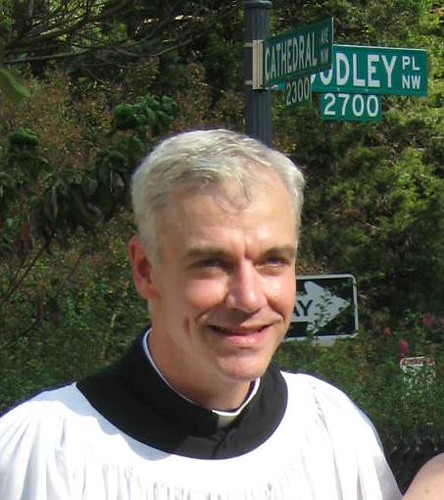
Sunday, February 27, 2011

Worries


A sermon for the Eighth Sunday after the Epiphany, February 27, 2011. The lectionary readings are Isaiah 49:8-16a, Psalm 131, 1 Corinthians 4:1-5, and Matthew 6:24-34.


In the late 1980’s, and especially after the Tom Cruise movie, “Cocktail,” almost everywhere you went, you would hear the Bobby McFerrin song, “Don’t worry, be happy.”

In every life we have some trouble
When you worry you make it double
Don't worry, be happy......


McFerrin got the phrase from a poster he saw that had popularized the teachings of an Indian mystic, Meher Baba, who was especially popular in this country through the 1960’s and 70’s. McFerrin got the words from a poster, but he could have just as easily gotten them from today’s Gospel.

The words, “Don’t worry, be happy” also went right along with some of the excesses and superlatives that were so much a part of the 1980’s. Big hair, shouldered sport coats and jackets, big cars, and big credit card bills were the thing. I remember hearing thoughts in church and by cultural commentators pointing out that it was just this kind of sentiment of “don’t worry, be happy,” that contributed to self-centeredness and all kinds of worse problems. It was easy for me to agree with those who criticized the idea of not worrying, and just being happy. I was in seminary in part of those years and took EVERYTHING seriously. I was too busy trying to be righteous to think much about being happy, and I was far too anxious about everything to even begin to understand that simply little phrase, “don’t worry.” And yet, we meet that sentiment head-on in Jesus’ words.

“Do not worry about your life, what you will eat or what you will drink, or about your body, what you will wear… look at the birds… consider the lilies…do not worry”…. Again he says, “Do not worry about tomorrow, for tomorrow will bring worries of its own. Today's trouble is enough for today.”

Jesus is talking about trust in God. He’s talking about practical living, but he’s also simply telling a very basic truth, too, isn’t he? All the careful investing in the stock market over the years…. And look what happened in just a few months. One can invest time and energy and teaching and faith in children, and yet, they can very well make their own decisions about which way to go, what to do, even which god to follow. And one can invest one’s heart and soul into another person, only to lose that person whether through death, or divorce, or distance. We can hope and plan and pray and work our way into the future, but when it comes right down to it, we don’t own the future. We have only THIS day.

The old Robert Burns poem talked about it so well, in which Burns notices the scurrying of a little mouse. He observes the mouse’s hurrying, the mouse’s desperation in stealing a little something to eat here and there, the mouse’s little house all falling apart, and then notices

But Mouse, you are not alone,
In proving foresight may be vain:
The best laid schemes of mice and men
Go often askew,
And leaves us nothing but grief and pain,
For promised joy!


And yet, Jesus DOES promise joy. He promises joy not in success, or health, or in finding love in this life, or in answered prayers, but joy in what he calls the “kingdom of God.” And whenever he talks about God’s kingdom, Jesus is careful not to talk about it in terms way off and distant, but in terms that are immediate, intimate, and close-by. The kingdom of God is in your midst, he says. The kingdom of God is upon you. And in today’s Gospel, I think Jesus is giving us an important key to the kingdom, the key of trust.

It’s easy to say, “have faith,” and “trust,” but it’s hard to do. Even as a child, I used to worry about all kinds of things I had no control over whatsoever. Some of that continues into today, but when I’m occasionally sane (or even slightly faithful) I can laugh at myself, give thanks for the moment, and remember to trust God. But I think this “trusting in God” involves faith, and it seems to involve at least three types of faith. For trust to build, it seems like there needs to be faith in God. But there also needs to be a measure of faith in other people. And then, there’s the hardest of all, there trusting in God also involves our having a little faith in ourselves.

We talk about having faith in God, but how often do we really pray to God? I don’t mean the kind of prayer that presents God with a little box and then gets mad when God doesn’t fill the box with what I’ve imagined. It’s more mysterious than that. I might feel like I need a car to get to work. One kind of prayer might really spell it out, “God, please give me a green Porche with leather interior.” I might pray with all my might, but will probably be disappointed at the result of the prayer. I could get angry at God, use this as a simple proof that God doesn’t exist, and do what I need to do to buy my own green Porche. But perhaps a more faithful prayer might involve my praying to God for an answer to my transportation problem. I would not just mention this while walking down the street. But I would commit to praying about it. I would pray to God for an answer to my transportation problem every morning for several weeks, or maybe for a month or two. [When have we ever prayed like that for anything?]. God might answer that prayer, but it might involve a friend or neighbor suggesting we carpool. Or it might involve looking more closely at public transportation. Or it might be the nudge I need to look for other work. Or, there might even be what feels like a miracle, with a friend mentioning that her mother is looking for someone to give a decent car to—it’s no Porche—but it runs, and she’d like it to go to a good home. Who knows, but trusting in God, having faith in God, includes our having the faith to pray for God’s will.

The second kind of faith is faith in other people. Let’s look at my “car problem” again. In addition to praying to God, perhaps I might mention my need for new transportation to a friend or a coworker. Granted, this risks me looking needy. It risks me showing others that I might not have my life together as well as I might have liked to portray it. But it opens me up to other people—many of whom also might even have a relationship with God through which God is also trying to work. Having faith in other people might involve our asking for help, asking for advice, asking for guidance.

And finally, all of this trusting in God through faith takes a little bit of what is obvious, but so often overlooked. It takes a certain amount of faith in myself. There have been other times that God has brought me through difficult situations, and so I recall those, and remember that God has made me strong and alive. I can make choices. I have agency. I have skills, though some might need to be developed more consciously. Having faith in myself doesn’t mean getting all puffed up in a Stuart Smalley kind of way, looking in the mirror and saying, “I’m good enough, I’m smart enough, and dog-gone it, people like me.” Having faith in myself means taking stock, being honest, but still at the end of the day and its beginning, remembering that I’m a child of God. It means remembering words like those of Jesus that remind, “You are of great value . . . Strive first for the kingdom of God and his righteousness, and all these things will be given to you as well.”

The kingdom of God is a place of faith. Yes, faith in God, but also faith in others (who are God’s children) and faith in ourselves, God’s child.

The Collect of the Day, the prayer that begin this Mass is one that perhaps we, who have a tendency to worry, should all memorize:

Most loving Father, whose will it is for us to give thanks for all things, to fear nothing but the loss of you, and to cast all our care on you who care for us: Preserve us from faithless fears and worldly anxieties, that no clouds of this mortal life may hide from us the light of that love which is immortal, and which you have manifested to us in your Son Jesus Christ our Lord.


It’s a prayer that sustains, and reminds, and encourages. It says, “trust in God. Have faith.”

May God’s Spirit be so alive in us as to chase always all worry and fill us with love. In the name of the Father, and of the Son, and of the Holy Spirit. Amen.

Sunday, February 20, 2011

Not so perfect

A sermon for the Seventh Sunday after the Epiphany, February 20, 2011. The lectionary readings are Leviticus 19:1-2,9-18, Psalm 119:33-40, 1 Corinthians 3:10-11,16-23, and Matthew 5:38-48.

This year marks the 400th anniversary of the completion, printing, and distribution of the King James Bible. While the King James version has shaped much of Western Civilization, adding majesty and imagery to our prayers, our worship, and our pictures of God, we have also, 400 years later, inherited a few of its problems. In some places the translators guessed at the meaning of a word. In other places they did what people of every age do, and wrote in their own cultural assumptions. Especially since the discovery of scrolls in the Dead Sea area in the 1940’s, scholars have had additional texts to compare, and in many cases words that were ambiguous before have found more definite meaning.

Also, there is the issue (as with a Shakespeare play or a Tallis anthem) of the English words themselves having very different meanings today.

When the King James Bible uses the word, “conversation,” it means behavior, not talk between people. “Meat” refers to any food, not just that from an animal. And “prevent” really means, “precede.” So when Psalm 88:13 says “Unto thee have I cried, O LORD; and in the morning shall my prayer PREVENT thee.” The psalm is not asking that prayer might keep God away, but rather, that prayer would come before God, prayer would welcome God in.

My favorite example involves the appearance of unicorns. In six different places the King James Bible mentions unicorns. The translators were not sure about the word in the Hebrew. More contemporary scholars understand it as a wild bull of some kind, with two horns, not one, but for what reason the 17th century scholars chose to use unicorn, no one knows.

And then we come to a word that appears in today’s Gospel. Among the most misunderstood and most unfortunate words we have inherited is used verse 48: “Be perfect, therefore, as your heavenly Father is perfect.” This is the King James Bible, but the same use of the word perfect follows in the New King James, the Revised Standard Bible, and the New Revised Standard Bible, and many more.

We know what “perfect” means. When we perfect a draft of a paper or a document, it means that we try to get rid of all the mistakes, all the errors, all the misspellings and typographical mistakes. Perfection usually has to do with the ideal, with what we may agree out loud with our mouths is unobtainable, but all the while on the inside we are still measuring ourselves against some idea of perfection.

But the word used in today’s Gospel doesn’t mean what we usually mean by “perfect.” The word used is the Greek word “teleios.” And while I usually hate to sprinkle sermons with fancy-sounding words, this is one that finds it way into other fields, as in Philosophy, teleology has to do with the end or the final result of something. A teleological argument for creation would say that all of nature is aiming and building toward an end, and this supports the argument for a creator who is behind that design.

More than “perfect,” the word has to do with reaching maturity, with being whole or complete. One writer (David A. Duke) uses the image of an acorn to explain this word. A “perfect” acorn, in this biblical sense, would not be the biggest acorn on the tree, nor the prettiest, nor the meatiest (except, perhaps to a squirrel). Instead, the “perfect” acorn in the sense Jesus is using the word, would be a full-grown, leafy, majestic oak tree. The “perfect” acorn would be the acorn that has grown to full adulthood, has grown beyond its “acorn-mind,” has grown into something that is beautiful, and helpful, and useful.
Eugene Peterson’s version of the scriptures, called “The Message” makes this especially clear. He translates and paraphrases verse 48 not as “Be perfect;” but rather, Peterson hears Jesus say: “In a word, what I’m saying is, Grow up. You’re kingdom subjects. Now live like it. Live out your God-created identity. Live generously and graciously toward others, the way God lives toward you.”

The kind of perfection Jesus encourages us towards is related to God and the generosity of God. “Be whole as God is whole, be complete as God is complete.” At the end of it all, there’s the culmination in Jesus’ saying, “Be like God. Be generous like God. Surprise other people with that generosity and amazing things will happen.”

This famous saying “if anyone strikes you on the right cheek, turn the other also,” has nothing to do with accepting abuse or acting like a doormat for others. As many commentators have observed, to be hit on the right cheek in the Roman world would have normally meant that someone used the back of their hand to smack you, so it would not only be a violent act, but also—if not more so—an insult. It meant that the person striking regarded you as lower than himself or herself, as though you were inferior—in that world, a slave, a child, a woman. Hitting back would just continue the cycle of violence. Offering the other cheek, however, is a statement: “Ok, hit me again, but this time, you have to view me as an equal.” It would change the power dynamic.

And in the other example, a rich person takes a poor person to court. If they sue for your outer garment, give them your undershirt as well, so you’re standing there naked. It won’t shame you, but will shame the other person who has gone to such lengths to get money from a poor person.

And a similar thing is meant with the situation of a Roman soldier asking someone to carry his equipment. There were cultural rules and expectations for this sort of thing. So by carrying the equipment further, you would not only startle the soldier, but break the cultural code and risk his embarrassment. You would make him look foolish.

N.T. Wright suggests that these stories are a snippets, almost cartoons. Jesus is saying through these images, “imitate God.” “Be like God.” God is generous beyond what anyone would expect, so be generous with each other, be larger than your usual self.

In the 3rd and 4th centuries, holy men and woman went into the Egyptian desert looking for God and looking for themselves. Some probably went looking for what they thought might be perfection, but when confronted with their own internal demons, when confronted with the teachings and sayings of older, wiser hermits, they soon came to understand that the way to perfection is through imperfection. The way to wholeness is by admitting one’s brokenness.

There’s a great story about a desert father called Abba Moses. It seems that a brother living in community in another part of the desert had committed a fault and a kind of council was called. The brothers all wanted Abba Moses to go, but he refused. Finally, someone sent a messenger to him and said, “Abba Moses, please come. Everyone is waiting for you and for your opinion on the matter.” So Abba Moses got up and went, but he took a leaking jug filled with water, and carried it with him. The other monks came out to meet him. They saw the leaking jug and asked, “What is this, Father!” Abba Moses looked at them and said, “My sins run out behind me and I do not see them, and today I am coming to judge the faults of another.” When they heard that, they said no more to the brother, but forgave him.

We have seen that the King James Bible is not perfect. Those who have tried to live a Christian life before us were not perfect. We are not perfect, but the really good news today is that we’re not called to be perfect. If anything, we’re encouraged to admit our imperfection and to be generous in allowing for the imperfections of others. This generosity leads to wholeness. It leads to maturity. Such generosity helps us to grow into something like giant, beautiful, long-lived well-loved trees.

In the final chapter of Revelation there is an image of the holy city, the New Jerusalem. There is a river of the water of life. The Lamb of God presides. And there is a tree of life, “and the leaves of the tree were for the healing of the nations.”

We are those leaves, imperfect, but growing, changing, developing in generosity, all under the watching care of God. Thanks be to God that we don’t have to be perfect.

In the name of the Father, and of the Son, and of the Holy Spirit. Amen.

Tuesday, February 15, 2011

Choosing Life

A sermon for the Sixth Sunday after the Epiphany, February 12, 2011. The lectionary readings are Deuteronomy 30:15-20, Psalm 119:1-8, 1 Corinthians 3:1-9, and Matthew 5:21-37.


In our first scripture reading from Deuteronomy, Moses is giving Israel an enormous pep-talk. After forty years of wandering in the wilderness, of wondering if God was till directing them and leading them, of worrying about what might come next, Israel is on the edge of moving into the Promised Land. I don’t know the geographic setting for the speech, but from its imagery and majesty, I wonder if it wasn’t on a hill somewhere, overlooking a great expanse of land down below, and far away. Moses speaks to the occasion in grand terms, “I have set before you today life and prosperity, death and adversity. If you obey the commandments of the Lord your God, walking in his ways, and observing his commandments, decrees, and ordinances, then you shall live and become numerous…[You will be blessed.] But if your heart turns away and you do not hear, but are led astray to bow down to other gods and serve them, [then] I declare to you today that you shall perish; you shall not live long in [that] land….” Life and death, blessings and curses. Choose life so that you and your descendants may live, loving the Lord you God, obeying him and holding fast to him; for that means life to you and length of days.” Choose life.

Choosing life can be every bit as dramatic as Moses makes it sound. We choose life when we move into a new relationship. We choose life when we plan for a child. We choose life when we make a new and better decision about the direction in which we’re headed.

But choosing life also involves smaller decisions. The decision of conversations entered into, and conversations avoided that help us choose life. There are decisions of what we eat and drink, of how we move or exercise that go into choosing life over death.

Those who study the relationship between the mind, the body, and the spirit would say that we choose life whenever we pray or mediate—that this calms the body and the mind and the spirit and opens a way for God to live within us and among us. Choosing life is not so hard, but it means choosing life at every moment, not just when we’re at the edge of a precipice.

The Gospel today can sound like a real “laying down of the law.” It can be off-putting and scary. It can sound like a faith that leaves out people. In fact, if we were to miss the fine points of the Gospel, most of us would probably find ourselves left out.

Jesus is re-interpreting the old law, saying, “it’s not enough just to keep the law. That probably won’t work very well, anyway. The key to living faithfully is to try to understand the things that move under the surface, the motivations and moods, the fears and fantasies that lead us off-track.”

Jesus repeats the commandment, “You shall not murder.” But then he goes further by uncovering some of the things that lead to murder. We might hear the talk of murder as extreme, until we begin to think of the anger, the frustration, the road-rage, the minor annoyances that can all too easily escalate. We might begin by harboring a grudge or nursing a resentment, and if we’re not careful, we can end up in court.

Instead, Jesus says we should work at reconciliation. He speaks of going to the temple in Jerusalem for worship, but if you remember your neighbor has something against you—stop your worship and go work things out with your neighbor beforehand. Notice how Jesus puts this—he doesn’t even say, if “YOU” have something against your neighbor, but rather, if your brother or sister has something against YOU. That changes the responsibility for reconciliation, doesn’t it? Our tendency is to ignore the problems. Especially at church, or in any organization, we think that if we just avoid “such and such” or act a certain way or say a certain thing, then future conflicts can be avoided. But when we come to the altar, we feel the break in community and it haunts us. Here, Jesus is exaggerating his point. If one left the temple in Jerusalem to go and be reconciled to a neighbor, it might take hours or days. You wouldn’t just leave the goat or turtledove or whatever you sacrifice might be sitting there on the temple steps. And yet, his point is made, isn’t it? Until we at least begin to pray for the person who has a problem with us, or with whom we have a problem, whatever we offer at the altar will be less than what it might be. And we will not quite be free. Prayers of confession are a beginning. A note, or phone call, or email, or conversation with another person is a beginning. A prayer for one’s enemy or one’s hard-to-get-along-with brother or sister, is a beginning, and that opens the heart to God’s grace. If we took Jesus’ words literally, we would have a whole lot of unused communion wafers every Sunday. But instead, we confess that we are broken people on the mend, and we ask for God’s grace to restore us and help us restore broken relationships.

Jesus goes on in the gospel, and it gets even messier. “You shall not commit adultery,” he reminds us. But then goes on to warn about lust and about all the urges and senses that, if given energy and encouragement, lead to adultery. Answer is to watch the emotions, watch the heart.

Jesus talks about divorce. And this is one of those topics (like abortion, like homosexuality, like many issues) that really warrants an entire series of looking closely at what scripture says, at how the culture of the time influenced the scriptures, at how faithful people through the ages have understood the movement of the Holy Spirit, and how we, today, live openly and honestly believing that “All Scripture is inspired of God and beneficial for teaching, for reproving, for setting things straight, for disciplining in righteousness” (2 Timothy 3: 16-17) but also, that the Holy Spirit helps us interpret scripture for our own day and our own lives. There are times when a divorce is an unfaithful decision, made out of selfishness or spiritual immaturity. But there are also times when divorce is the ONLY faithful decision, and then one really needs all one’s faith to continue choosing life even in the midst of dark days. Choosing life means reconciling as much as possible. Choosing life means praying for the other people involved, it means working on one’s issues, and choosing life after divorce or the ending of any relationship means being open to a new relationship or re-marriage when God opens that possibility.

The Ten Commandments, and the shortened versions we read at every Mass (that we should love the Lord our God with all our heart, and with all our soul and with all our mind, that we should love our neighbor as ourselves.)”—these commandments aren’t kept by pronouncement or decree, but by the little, daily decisions we make to be faithful.

In a short video we saw this morning during the Adult Forum, we heard Karen Armstrong talk about dogma as being very much like the rules to a board game. Reading the rules is boring and abstract—it makes no sense until we begin to throw the dice. It’s that way with living into the commandments and hopes of God.

We choose life with the attitude we adopt when we wake up in the morning. We choose life in our thoughts, in our conversations, in our willingness to apologize, in our ability to forgive, in our faith to move on in the Spirit of God, and in our thinking about what will follow us in the future.

What we do (or don’t do) affects those who come after us.

This idea was used as a motivation by Coach Mike McCarthy last Saturday night as he sought to motivate the Green Bay Packers before the Super Bowl. Not only did he have the whole team fitted for their Super Bowl rings the night before (a bold move and show of faith, by any standard), but he also brought in a motivational speaker. When he was asked later what the speaker said, McCarthy explained that the message had to do with getting the players to think about what people would remember about them later. “Outlive your life,” he said. The Super Bowl they were about to play would, indeed “outlive their lives” as family and friends would remember it for ever.

We can all make mistakes and hurt other people in such a way that we leave behind us a whole way of wreckage. Broken relationships, hurt feelings, words that can’t be taken back.
But Christian faith gives us daily opportunities to outlive our life—to live in such a way that what is positive, what is good, what is uplifting, what is forgiving, what is encouraging, might follow us.

Before us is set “life and prosperity, death and adversity.” If we obey the commandments of the Lord our God, walking in his ways… then we shall live, and we shall live in such a way that our life is outlived by the one who is Love Himself.

Redeemed by Christ, empowered by the Holy Spirit, let us choose life this day and for ever.
In the name of the Father, and of the Son, and of the Holy Spirit. Amen.

Sunday, February 06, 2011

The Spirit at the Center

Labyrinth at Chartres Cathedral

A sermon for the Fifth Sunday after the Epiphany, February 6, 2011. The lectionary readings are Isaiah 58:1-9a, (9b-12), 1 Corinthians 2:1-12, (13-16), Psalm 112:1-9, (10) and Matthew 5:13-20.

Salt and light are strong images. They gain even more strength in the teaching of Jesus. He ties them to faithfulness and suggests that by resembling salt and light we will not only be useful to him and to God, but we will please God, and will be a part of what Jesus calls the Kingdom of Heaven. It’s easy to see why these images have guided Christians for centuries. But taken out of context and blown out of proportion, salt and light become destructive and imperialistic.

As the Puritan John Winthrop sailed towards the Massachusetts Bay Colony, he preached a sermon on the ship entitled, “A Model of Christian Charity.” Winthrop said, “For we must consider that we shall be as a city upon a hill. The eyes of all people are upon us. So that if we shall deal falsely with our God in this work we have undertaken, and so cause Him to withdraw His present help from us, we shall be made a story and a by-word through the world.” The words have been used again and again by preachers and presidents to inspire and to encourage. The trick is to remember that they are words having to do more with service than privilege. There is such a thing as too much salt. And light can sometimes blind rather than lead.

St. Paul’s words to the Corinthians moderate some of the possible zealotry of the Gospel.

When Paul approaches the worldly and urbane Corinthians, he does so not as though he’s got the light and they’re living in the dark. He does not as though rubbing salt into a wound. Bur rather, he approaches them simply, as he says, presenting Jesus Christ crucified. Paul describes his approach as one of weakness, fear, and trembling. Of humility, really. He trusts God more than he trusts his own words or wisdom.

Paul describes beautifully the word of the Spirit of God—the Spirit being that part of God’s movement and energy in the world that appears when words fail, that soothes when answers are hidden, that accomplishes when plans fail. The Spirit is the sometimes our last resort, but it’s often God’s first choice of presence in our lives. “The Spirit searches everything, even the depths of God.”

And then Paul does an interesting thing, he relates this Spirit of God to the mind of Christ. In that Jesus Christ was fully God and fully human, his mind was filled with God and the things of God. And so, to be like Jesus Christ, to set our mind on the things he values and teaches and lives out, that is to allow our mind to be filled with God and the Spirit of God.

Filled with the Spirit, we discover a funny thing: all of a sudden, we are acting and thinking and living like the people Jesus has described in the Gospel. With the Spirit of God pouring through us, we shine like light for others—not in a self-conscious or self-aggrandizing way, but in a way that comes from God. And we become salty, as well—not in a way that overpowers or offends, but in a way that is distinctive and delights. If you cook at all, you know that too much salt overwhelms a food and so you taste nothing but the salt. But just enough, and the salt encourages other flavors, and the whole dish is made better. It’s that way in the world, as well. Empowered by the Spirit of God, we add our own Christian perspective and find that it adds rather than obliterates, it promotes rather than dominates.

And that second part of the Gospel, about the commandments remaining firm and how, if we should break a commandment or teach others to do so we will be “least in the kingdom of God” but how, if we keep the commandments and teach others to do so, we will be “great in the kingdom of God”—all of this sort of takes care of itself. Enlivened by the Spirit of God, we realize it when we fall or fail or break a commandment. And so we say we’re sorry. We might go to confession. We stop and re-evaluate and pray for the grace to carry on. It’s not the focus of our faith, but a by-product of living faithfully.

How do we get this mind of Christ? How do we get the Spirit of God?

At baptism, the Holy Spirit is given to us. But we spend our lives living into the Spirit of God, through the process the church sometimes calls sanctification—a way of being made holy. And one way of allowing the Spirit room in our lives is through prayer.

From time to time, we have offered what is known as Centering Prayer at All Souls. We don’t currently have a communal time for this, but many of us continue to practice Centering Prayer or something like it on our own. It works very simply. One sits still in a chair or on a prayer stool or a mat, and one opens oneself to the Origin of all that exists. When a thought shows up, simply let it pass on through. Just return to the silence, the space, the place where you are inviting God to be. Sometimes a “centering word” is helpful. It can be anything like “grace,” or “blessing,” or Jesus’ word for God, “abba” or perhaps “amma.” The word isn’t the focus, it just reminds you to come back to center and simply “be.”

Centering prayer usually happens for about 20 minutes or more. It takes practice because it is counter-cultural in so many ways. In such prayer, we’re not struggling to keep up with emails, with news, with tasks, with people, with expectations, with hopes. We’ve not even paying attention to our own faith, or beliefs, or prayers. It’s a time for being quiet, for practicing the quiet. As Cynthia Bourgeault describes it, “What goes on in those silent depths during the time of Centering Prayer is no one’s business, not even your own; it is between your innermost being and God; that place where, as St. Augustine once said, 'God is closer to your soul than you are yourself.'” (Centering Prayer and Inner Awakening, p. 6)

We are called to be salty, bright, freed and forgiven people, living in the Spirit of God and sharing God’s love with any who will have it. Helped by one another, may we continue to live into the Mind of Christ.

In the name of the Father, and of the Son, and of the Holy Spirit. Amen.

Sunday, January 23, 2011

The movement of grace


A sermon for the Third Sunday after the Epiphany, January 23, 2011. The lectionary readings are Isaiah 9:1-4, 1 Corinthians 1:10-18, Matthew 4:12-23, and Psalm 27:1, 5-13.

Each Sunday when we proclaim the Gospel, we take the special Gospelbook from the altar and we move with it. We usually step into the congregation at least a little bit. At the High Mass, we move with a whole group of people—a thurifer with incense, acolytes with their candles, as we are led by the cross. If it looks a little like a parade, that’s intentional, since in the reading and celebration of the Gospel, we are proclaiming that Jesus Christ lives among us. We listen for him in the reading and then in the interpretation, and then in the sacraments of bread and wine, of body and blood.

While there’s always some movement in our proclamation of the Gospel, today’s reading almost seems to call for special staging. There’s a lot of movement in this Gospel, and it almost seems like the kind of time that we might be a little more dramatic than usual. We could read portions of the Gospel as we move through the whole church, pausing at various places, and continuing on this way, and that way.

If you notice, everybody’s moving in today’s Gospel. They’re moving from darkness into light. They’re moving from sin into new life. And they’re moving from what is familiar and safe toward places that are new and uncertain.

The first image of movement begins in our Old Testament reading from Isaiah. “The people who walked in darkness have seen a great light.” Isaiah speaks to a people in exile, a people cut off from their homeland, a people yearning for a way forward. They are hoping and praying for a better way forward.

In our second reading, the Apostle Paul is preaching to the people of Corinth, where they, too, are looking for a way forward, but they can’t decide who to follow. And so, they each pick a different way and they argue about that—some claim to follow Paul, others claim to follow Jesus. Still others claim to follow Cephas, and Apollos, and who knows who else. What is clear is that the Corinthians are not getting very far because they’re all trying to go in different directions. They’re still stuck in darkness but they’re so busy fussing that they don’t even seem to realize that they’re stuck.

And then we hear today’s Gospel in which those words and images of Isaiah are recalled as Jesus emerges as a leader who shows the way. But his way isn’t easy. “Repent,” he says. “Repent, for the kingdom of God has come near… Follow me.”

The word that he uses, “repent,” is familiar to people who have been around the church a little. Sometimes the word is used as a battering ram or as a threat, but it’s intended as a word of hope, a word of encouragement. Many have heard before that the word means “to turn around.” If we wonder what that looks like, we can begin by looking at Paul, who wrote our second reading to the Corinthians. His was one of the most dramatic turn-arounds. He was a Pharisee, a sort of religious professional concerned with people keeping all the religious laws, and he persecuted Christians. But then he changed. He turned. He repented, and became not only a follow of Jesus, but also a promoter of Jesus and the way of Christian love and life.

And that’s what can happen when one actually follows Jesus. There can be a real turning—a turning around, a turning toward something new, a turning into a person better than you might have ever imagined.

Too often (if you’re anything like me), we turn, but we keep on turning. It’s as though we are stuck in a revolving door—we turn around, sometimes making a big fuss out of the new direction we’re going or the new habit we’re adopting-- in a New Year’s resolution, or in the season of Lent-- but then before we know it, we’ve simply turning around and around. And we keep on turning until we eventually grow dizzy and we lose heart. Sometimes we’re flung out of the revolving door and fall on the ground, broken and battered.

But the kind of turning, or repentance, that Jesus leads us through involves leaving something behind, turning in a new direction, and moving forward with others.

Paul says that “If anyone is in Christ, that person is a new creation; the old has passed away and the new has come!” The old is passed. The door can be shut and the key thrown away, as we turn.

We leave the old habit, or sin, or resentment behind, and we turn in a new direction.

We allow Jesus to take our hand and turn us in a new direction so we can’t even see the old anymore. Some versions of Christianity make an enormous point of this particular part of the turn-around. “Put your faith in Jesus,” and everything will be just fine. Faith becomes a one-on-one between me and Jesus, but that’s only part of the conversion. There’s another part to repentance.

That third part of repentance happens as Jesus puts our hand in the hand of another. We don’t go through it alone, and the person who experiences forgiveness in solitude from God alone usually only exists in movies and over-edited lives of the saints. More often, in order to keep facing the new direction, moving into the new place of forgiveness and light, we move with others, who also are looking to repent, to change, and to renew their lives in Jesus Christ. Grace can be apprehended alone, but I think it’s most often felt in relationship.

There’s a great story about this communal understanding of grace in a new book by Jay Bakker, [Fall to Grace: A Revolution of God, Self, and Society] the son of Jim and the late Tammy Fae Bakker. A young man named Jared tells his story. His father was a minister and Jared was a rebel. He did everything he could to go his own way. In his late teens he drank and drugged and slept around a lot. He was the “other guy” who broke up two marriages. But at the age of 23, he discovered his latest girlfriend was pregnant. It was about that time that he went to his parents’ house, looking to raid the kitchen, and his father asked him to step outside for a minute. Jared writes that while his father had been strict, he’d never known him to be violent, but at that moment he was afraid. But he went outside. His father looked at him and asked, “are you doing drugs?” At a kind of breaking point, reading to get out of the revolving door or turning round and round, Jared blurted out, “Yes!.” And then he went on, “there’s something else. You’re going to be a grandfather.” There was silence. There was a pause. And then something amazing happened. His father got tears in his eyes, looked at his son, and said very quietly, “So, what are we going to do about it?”

What are WE going to do about it? In that little word of “we” Jared understood grace—the forgiveness and grace of his parent, but also the forgiveness and grace of God, since that kind of acceptance transcends human emotion and is really impossible without God. The revolving door stopped and repentance moved forward for Jared.

This is why we are “church.” This is why any Christianity that is not communal quickly becomes something else entirely. We need one another and God works through one another for healing and forgiveness.

And so, as I suggested earlier, today’s Gospel is a Gospel-on-the-move. It falls flat if it stays in the pretty silver book on the altar. It dies in this place if there is no echo from our reading. It remains useless if its movement doesn’t continue through this service and move with us into the world, as we go out changed, forgiven, and freed.

Friends, the Good News this day is that whatever there has been in our lives that has separated us from God, or separated us from other people, or separated us from our truest selves—these things can be left in the dark. We, who have walked (and lived) in darkness have seen a great light and on US has the light of God’s grace shined.

In the name of the Father, and of the Son, and of the Holy Ghost. Amen.

Sunday, January 16, 2011

Finding our place in the dream of God

Captivity and Resitance, by Romare Bearden, African American Museum of Philadelphia.

A sermon for the Second Sunday after the Epiphany, January 16, 2011. The lectionary readings are Isaiah 49:1-7, 1 Corinthians 1:1-9, John 1:29-42, and Psalm 40:1-12.


Yesterday I was able to go to a concert given by the group Sweet Honey in the Rock. The group began year ago, but has cycled new members through over the years. It remains an amazing a capella group of African American women who sing about justice, about hope, and about life.

The concert yesterday was in celebration of Martin Luther King, Jr. What was so refreshing for me was the way in which they celebrated. They didn’t offer dramatic readings of King’s words. There was no slide-show of his life. Instead, they had done the hard work of what we Episcopalians might call “reading, marking, and inwardly digesting” his words, so that the performance managed to convey and invite the audience into the life of Martin Luther King.

The group helped the audience thing not only about the calling of Dr. Martin Luther King, Jr., but also about our own calling—what are We doing to create a better world? What are WE doing to heal the divisions that still exist. To what extent are WE following the dreams of God? To what extent are we living into our own calling?

When I use the term, “calling,” I mean to describe one’s deepest sense of purpose, one’s sense that this is the right thing to do and the right time to do it, I mean one’s sense of being selected by God to do a specific thing.

In our reading from Isaiah, we hear Isaiah’s own sense of God’s calling: “The LORD called me before I was born, while I was in my mother's womb he named me.” God said, “You are my servant, in whom I will be glorified.” Isaiah wonders if he heard God right. But God says, yes, “it’s you I’m talking to.” From time to time Isaiah wonders and checks in with God, each time hearing another version of, “You are my servant, . . . in whom I will be glorified.”

If you think about that for a minute, those are amazing words because they mean that God needs Isaiah in order to get things done. God needs Martin Luther King, in order to get things done. God needs us, in order to unfold and reveal the kingdom of God in our world.

The Gospel is about the revelation of God’s kingdom and plan, especially about the revelation that is Jesus, and recognition of Jesus. It’s about John the Baptist’s recognition of Jesus as the Christ, as God’s anointed one; and it’s also about several of the disciples as they recognize Jesus for who he is, and in so doing, recognize themselves.

There are two sides to understanding one’s calling—the first has to do with recognizing the caller, who is God. But the second part comes in recognizing ourselves in the midst of God’s calling.

John illustrates what it’s like to recognize the one doing the calling. He sees Jesus as the Lamb of God. We might think of a lamb as a soft, weak thing. In Judaism the lamb was an animal of sacrifice and as a symbol, the lamb represented innocence and blamelessness. But a lamb also had undeniable strength. Because of the lamb, people were forgiven. Because of the lamb, people were joined again to God.

And so when John names Jesus as the Lamb of God, he is in part prophesying, perhaps in part hoping, and in part stating what he has already seen to be true, that through Jesus people are brought closer to God. Through the life, death and resurrection of Jesus, we experience the healing of sins, and the resurrection to eternal life in God’s love.

John recognizes Jesus. The other disciples, Andrew and another, see Jesus, but also begin to recognize themselves.

When Jesus sees the two disciples, he asks them, point blank, “What are you looking for?” The disciples don’t really answer him, but instead, they ask for more time. They aren’t sure what they want, but they know they want to know Jesus a little better. After a while, Andrew goes to his brother and says, “We have found the Messiah.” But what he’s also saying is that he has found himself; he has found his calling.

Of course, sorting out one’s calling is more difficult than simply opening your heart to Jesus, and “poof,” an entire game plan is presented. It’s much more subtle than that. Whether you should be a fireman or a secretary, a nurse or a schoolteacher—whether you should buy a house, or take a new job, or pursue that special person… I don’t know the specific answer to those or many other questions…

But I do know how to find the answer. It lies in doing what the disciples did—spending time with Jesus, absorbing his words, absorbing his vision of the world, hearing God’s word through Jesus, hearing the promises of scripture and watching as they’re fulfilled in everyday living.

Frederick Buechner talks about the two sides of finding one’s calling—of recognizing the caller, but also of recognizing ourselves in the midst of that calling. He explains that to be called is to have a vocation—the Latin word, “vocare” means simply that: to call; and so a vocation is simply one’s calling—whether that be over time, or in the moment.

Buechner points out that there are always different voices calling us to different kinds of work—the trick is sorting out which voice is from God, which from society, which from a voice of super-ego or sole self-interest. The trick for the Christian is to find 1) the work that one most needs to do, and 2) the work that most needs to be done. In other words, Buechner says, vocation is that place where “your deep gladness and the world’s deep hunger meet.”

The meeting of our deep gladness and the world’s deep hunger happen in prayer, in worship, in fellowship and community; in struggle, in grief, in joy… in the midst of the sacraments. We live into our vocations together.

May we continue to be a people who dream the dreams of God. May we find the resources to follow, and may we find the risen Christ even as we find ourselves.

In the name of the Father and of the Son and of the Holy Spirit. Amen.

Monday, January 03, 2011

Our place in the Holy Family

"We are Family" by Kate Cosgrove

A sermon for the Second Sunday after Christmas Day, January 2, 2011. The lectionary readings are Jeremiah 31:7-14 , Psalm 84 or 84:1-8, Ephesians 1:3-6,15-19a , and Matthew 2:13-15,19-23.


In Henri Nouwen’s book, The Return of the Prodigal Son, he writes about his relationship with a work of art, Rembrandt’s famous painting of the prodigal Son and the Father, in the Hermitage in St. Petersburg. It depicts the famous parable Jesus tells in Luke’s Gospel about a son who asks for his inheritance early, goes out and squanders it all away, and finally returns home, ashamed, scared, and penitent.

You’ve probably seen a copy of the painting at one time or another. It shows a fairly dark background, full of shadows, with a number of different people looking on. In the foreground, there’s a young man kneeling, embracing an older man. The young man is wearing rags while the older one is draped in finery. The older one has both hands on the back of the young man, as if to say, “It’s all right now. You are home. You are forgiven.” As Nouwen contemplates the painting, he does what Jesus would probably have us all do when we hear that parable of the prodigal: Nouwen places himself in the story. He is quick to identify with the younger son, the one who runs away, almost spends away his life, and finally returns home in humility. But he also identifies with the older brother in the story, who resents the fun and freedom enjoyed by the younger one and is furious at the forgiveness of the Father. But it’s difficult for Nouwen to go further in identifying with the characters in the story.

He writes, “For a long time the father [figure] remained “the other,” the one who would receive me, forgive me, offer me a home, and give me peace and joy. The father [or mother] was a place to return, the goal of my journey, the final resting place.”

Nouwen’s own story progresses. His faith grows and he feels like God is trying to teach him something through the art of Rembrandt. Finally, he begins to sense that God is called him to identify more with the father in the parable. He’s being called to step into the role of the Father-- to offer forgiveness and acceptance, to offer loving guidance, forbearance, and hope. He is being called upon to point to the love of God our heavenly parent, but at the same time, not to relinquish his own role in forming and offering help to others.

He writes,

As the [parent] I have to be free from the need to wander around curiously and to catch up with what I might otherwise perceive as missed childhood opportunities. As the [parent], I have to dare to carry the responsibility of a spiritually adult person and dare to trust that the real joy and real fulfillment can only come from welcoming home those who have been hurt and wounded on their life’s journey, and loving them with a love that neither asks nor expects anything in return. (p. 132)

Nouwen is called to grow up and grow into spiritual parenthood.

Parenthood comes in many forms. Some become parents in a carefully planned and organized way. Others have parenthood put upon them unexpectedly. Still others (while not having children of their own) might find themselves in the role of parent, or foster parent, or aunt or uncle, or friend in a more circuitous, mysterious, God-filled kind of way. Some have a strong and preconceived idea of what parenthood means, and might miss other ways of being parents as God presents them.

In today’s scripture we see a snapshot of Joseph as a parent.

Earlier in the Christmas season we heard how Joseph received a visitation from the Angel Gabriel. It came as surprise. It came as shock. It was different from what he had imagined it might be and it may have taken a little while for God’s plan to sink in. But eventually, Joseph is “in.” He’s completely dedicated to Mary, to the Baby Jesus, and to God’s will for their lives, come what may. Christian Tradition has often imagined Joseph as a much older man who had already had children who had grown up, for the most part. Whether he did, or didn’t, we don’t really know, but in any event, what is striking is the degree to which Joseph steps into the role of parent and is willing to do anything for the welfare of his child.

In today’s Gospel we hear of some of the challenges that confront this young family from the very start. And yet, Joseph and Mary move forward, unafraid, with new-found confidence and faith in God. Joseph is warned about King Herod’s plan to destroy all the male children in the realm, so Joseph takes Mary and Jesus and goes to Egypt. He’s still worried even after Herod’s death, and they eventually settle in Nazareth.

While we don’t know the details, it seems like Joseph continues to protect and lead. We can imagine him showing Jesus how to work with wood and how to continue in the family business of carpentry. We read about how, when Jesus is a little older, he wanders into the temple gets into conversations with the rabbis there. Joseph must have watched and see the way in which Jesus was heading, the things he was interested in, and gently guided him along the way, as best he could. He probably still worried about Jesus and worried about the future, but he did his best to steer Jesus in the right way, and then he trusted God.


The Gospel we have heard today is sometimes used on the First Sunday after Christmas Day, when much of the Christian Church observes the Feast of the Holy Family. The Holy Family usually refers to that intimate cluster of Joseph, Mary, and Jesus, and many a preacher will draw conclusions that suggest the modern family should look much the same. But I wonder if God’s vision of Holy Family isn’t much larger? Didn’t Jesus say as much again and again? When asked about his family, Jesus points all around him (babies and old people, rich and poor, pleasant and unpleasant) —not in any way to ignore those who had brought him into the world and nurtured him, but to expand it to include all those who followed him, who loved him, and who sought to love God through him.

At our 11 a.m. Mass we baptize Jeremy and Thomas Dubois. As with other baptisms, there are godparents, or sponsors, to use the technical term that has been used since the early church. And I know that, as with other baptisms, no matter how mature or experienced or holy the godparents and sponsors might be—they will be nervous. What does it mean to answer “yes” to the questions asked in the Rite of Holy Baptism? “Will you be responsible for seeing that the child you present is brought up in the Christian faith and life?”—that’s a pretty big question. “Will you by your prayers and witness help this child to grow into the full stature of Christ?” -- another HUGE question.

But just because we may not stand literally as a sponsor for one being baptized, as the Body of Christ, as representatives of the Church Universal, we share in that dedication. We share in being responsible for helping people grow in the faith. We are, each of us, called (at some point or another, it might be today or next year, it might be this week, or far in the future) but we are each called to grow up in our faith and to serve as spiritual parents for others. We’re called to do what Nouwen said so beautifully, “to welcome home those who have been hurt and wounded on their life’s journey, and to love them with a love that neither asks nor expects anything in return.” If we’re able to do that – to welcome, to receive, to love—then we will continue to grow into God’s Holy Family in this place and beyond.

In the name of God, Father, Son, and Holy Spirit. Amen.

Sunday, December 26, 2010

Showing Up

The Three Kings make their way to the All Souls Creche

A sermon for the First Sunday after Christmas Day, December 26, 2010. The lectionary readings are Isaiah 61:10-62:3, Galatians 3:23-25;4:4-7 , Psalm 147 or 147:13-21, and John 1:1-18 .


I hesitate to talk about another Internet site in a sermon, lest the congregation think I do nothing but surf the Web. Nevertheless, I (like some of you) get more emails than I can read or want, but occasionally one surprises me. This season’s “keeper” has been a wildly creative Youtube video called the Digital Nativity, made by someone (or someones) called EccentricPT.

It basically tells the story of the birth of Jesus as though one is looking at a computer screen. After a click on GoogleEarth shows us a satellite image of Nazareth, we are looking at the Virgin Mary’s Iphone as she gets an instant message from the Angel Gabriel, “Mary, you’re going to give birth to the Son of God.” The story continues as screens are clicked and all of early 21st century technology tells a very old story.

As the telling progresses and Jesus is born, Joseph posts a picture of the baby on Facebook. The number of “likes” rises astronomically. He then creates an event called, “Meet the Baby.” The location is the Stable in Bethlehem. If you’re familiar with Facebook, one can create an event, and then send the invitation out to people, or others can simply stumble into the event’s posting. Then one has a choice to respond either, “I’m attending, maybe, or no.” For the event of “Meet the Baby,” we see the name Joseph, since he created the event. And then we see various guests’ names appear as attending. Melchior, Caspar, and Balthazar. According to scripture the three kings actually do attend, the occasion of which we celebrate on Epiphany, or El Dia de Los Tres Reyes, January 6.

I’ve read that this “attending” feature on Facebook and on other social media presents special problems. Usually, the list of those who are attending, the guestlist, is public information. The problem is that very few people want to say publicly that they’re not attending. Some email invitations give you space to explain, and that’s a good thing, but still, the statistics show again and again that there are events—especially charity events, social events, fundraisers, openings, to which several hundred people will respond “I’m attending,” and yet, only eight or ten people actually show up.

Showing up is the hard part to lots of things. Showing up for work, showing up for some commitment, showing up for appointments. It’s hard when you depend on public transportation, or when your car breaks down, or when you forget to look at the calendar (or, if you’re like me, and on occasion you’ve forgotten to synchronize your hand-held calendar with your office calendar.)

The term, “showing up,” has come to mean a lot more in popular meaning. For a child to grow up in a loving family, the parents need to “show up,” – for soccer games, and school meetings, and arranged times for pick up or dropping off. In relationships of all kinds, the key to being in relationship has to do with “showing up”—not just physically, but also emotionally, psychologically, and spiritually. And we all fail at this. We fail from time to time because we’re human. We fail because we get tired, or cranky, or distracted. We become self-consumed, living life by continually checking the “maybe” column, while refusing to commit to anything that might nudge us out of places that are familiar, comfortable, and private.

In the Christmas story there is a lot of “showing up,” going on. Early, Mary shows up for God, agreeing to be there for God, to be anywhere for God, simply “to be” for God. Then Joseph, who is tempted to run away, or as the scripture puts it (to divorce Mary quietly). But instead, Joseph shows up. The innkeeper shows up by opening his stable. The shepherds show up, as do angels and others, and eventually the three kings. There’s a lot of showing up, but all because of one major, overwhelming, earth-changing appearance.

God shows up. And there’s no “maybe” to it.

In the Incarnation, God comes into the world in a whole new way, physically and bodily, like one of us. He comes into fleshly existence, he is born as Jesus in order to feel like us, to hurt like us, to love like us, to eat and drink and sleep on the earth, even to die like us. But he rises again, and death will never be the same for those who believe.

As we anticipate the unfolding of Christmas and the visits of the Three Kings to meet the baby at the stable, we can think about our own opportunities to “show up.” As we move into a new year, it’s a good time to think about the ways and times that God has shown up in especially strong ways in our lives. It’s a good time to be grateful for all those who have shown up for us when we’ve needed someone most. And it’s an especially good time for us to think about the ways we’ve shown up for others, the ways that perhaps we’ve not always shown up, and to commit to being present in the new year—present for God and for one another.

The Word has become flesh and dwells among us: full, present, and alive.

In the name of God, Father, Son, and Holy Ghost. Amen.

Saturday, December 25, 2010

Christmas Day

Detail of the All Souls Altarpiece

A sermon for Christmas Day, December 25, 2010. The lectionary readings are Isaiah 52:7-10,Hebrews 1:1-4, (5-12) , Psalm 98, John 1:1-14.

The other week, the Foundation Fighting Blindness had its second annual “Dining in the Dark" dinner. [See the Washington Post article here.]

About ten years ago, some in Europe and here began turning out the lights for dinner. But not just turning out the lights. All door and window cracks are covered up. Cell phones and watches and other things that light up are not allowed. (At the dinner the other week, it was reported that whenever the flicker of a cell phone was seen, the people around that person began shouting, “Cheaters!”) This way of dining was created as a way of heightening the senses, of helping people really pay attention to the food (even as they paid exorbitant prices for the experience.)

But the dinner for the Foundation Fighting Blindness had another goal. It raised money, but it also invited people with sight to experience a little bit of what being blind might be like. Those helping to put on the fundraiser walked around the room wearing special night-vision goggles. But the wait-staff were all people who were blind or visually impaired. They had been trained earlier in the day.

Darkness and light are primary images for Christmas. A dark church glows with candles and merry faces. The first scripture reading last night was from Isaiah: The people who walked in darkness have seen a great light; those who lived in a land of deep darkness—on them light has shined.” And then we have today’s Gospel.

The light shines in the darkness, and the darkness did not overcome it. There was a man sent from God, whose name was John. He came as a witness to testify to the light, so that all might believe through him. He himself was not the light, but he came to testify to the light. The true light, which enlightens everyone, was coming into the world….And the Word became flesh and lived among us, and we have seen his glory, the glory as of the father’s only son, full of grace and truth.


God has come into the world in human form. That means that God understands how we feel (whether good or bad), how we move (whether easily, or with some challenge.) God understands what it’s like for us to be in relationship with other people—the difficulties and the absolute joys of family, of friends, of possibility. The Gospel actually hints at the relationship of the Holy Trinity within God—that ongoing dance of light that is Creator, Christ, and Holy Spirit. At Christmas we celebrate the incarnation of God, God’s becoming flesh, and it’s this “becoming flesh” that allows God to lead us through the dark and to be with us in the light.

At that Foundation dinner, some of the wait staff were people who couldn’t see. But that meant they had other senses that were heightened. Because they knew what it was to walk in darkness, they could lead others.

We have probably felt this kind of help and support from other people. It’s the person who has been there before—who has survived the cancer, the heart attack, the difficult family, the divorce, the death of a loved one, the pull of addiction—it’s the person who has walked through the darkness that is often able to help us find the way out.

Because God has come into the world in Jesus Christ, God has that same ability, but to an infinite degree. Having experienced rejection, sadness, pain, suffering, temptation, death, hell--- Jesus rose again to lead us in love, laughter, joy, peace, serenity, and the ability to live—to live in our own skin in this life, and to live in spiritual bodies in the next.

Christmas is earthy. It is rooted in reality. It is about the here-and-now, the relationships in which we live, and the relationships in which we put energy in a new year.

Frederick Buechner expresses the importance of the skin and bone, of body and limb, of the incarnate, when he points out that

All religions and philosophies which deny the reality or significance of the material, the fleshly, the earth-bound, are themselves denied. Moses at the burning bush was told to take off his shoes because the ground on which he stood was holy ground (Exodus 3:5), and incarnation means that all ground is holy ground because God not only made it but walked on it, ate and slept and worked and died on it. If we are saved anywhere, we are saved here. And what is saved is not some diaphanous distillation of our bodies and our earth but our bodies and our earth themselves . . . One of the blunders religious people are particularly fond of making is the attempt to be more spiritual than God.” (Wishful Thinking: A Theological ABC, p. 43.)


This Christmas, may God give us patience with our bodies and the bodies around us, so that we might perceive the life of God in the flesh, so that we might celebration the incarnation of God in our world.

In the name of the Father, and of the Son, and of the Holy Spirit. Amen.

Words for Adoption

Nativity window at All Souls

A sermon for Christmas Eve, midnight Mass, December 24, 2010. The lectionary readings are Isaiah 9:2-7 , Psalm 96, Titus 2:11-14 , and Luke 2:1-20 .


One of my favorite sites on the Internet is called Save the Words. It is a promotional site, in some ways, for the Oxford English Dictionary. When you reach the site, the screen to your computer is quickly wallpapered with words. Words like, plenishere, essomenic, crassulent, and macellarious appear. As you pass your curser over this screen-of-words, you hear little voices. “Hello!” “Pick me.” “Yo, over here.” “Me, me, pick me!” The words want your attention because the words are lonely and are seldom used.

If you click on a word, the definition is shown, along with a sentence using that word. I learn that “adecimate” means “to pay a tenth of one’s income, especially to the church.” (Ahh, what a quaint, old-fashioned, seldom-used word—but I digress.) With each word, there’s a little form which can be filled out if you agree to “adopt” the word. If you adopt a word, you are promising to use the word, in conversation and correspondence, as frequently as possible, to the very best extent of your ability.” This is all a fun and very clever attempt to save words that are endangered, words that are disappearing, words that are forgotten.

There is power to words, whether seldom used or overused. They can enlarge or enliven. They can also cut or castigate. Words can be chewed. We especially rdo this with words of scripture—we chew them, like ruminants (cattle, sheep, goats, deer and reindeer) chew the cud. We mull over scriptural words so we can (like the old prayer says) “read, mark, learn, and inwardly digest them.” In the manger, as elsewhere, there must have been a lot of ruminating going on the night Jesus was born.

The Gospel for Christmas Day proclaims, “The Word was made flesh and dwelt among us.” The birth of Jesus is described as a word, a word spoken, a word whispered, a word offered. And in tonight’s Gospel we see how various people hear this Word of God. They hear it. They ruminate upon it. And they begin to respond to it. But I imagine the characters in our Gospel each hearing God’s word in a slightly different way.

For Mary, I think she hears a word of love. She hears of God’s love for her from the beginning of time. “Full of grace,” she is called. And so, she is calmed, and soothed, and told by God’s angel that everything is going to be all right. Fear is swept aside by angel’s wings and Mary dares to believe. God loves her. God is bringing new love into the world through her.

For Joseph, the Word of God, this little, tiny, baby boy of a word, it must have sounded like new life. I love the tradition that Joseph was a good bit older than Mary, and so as foster father, Joseph sees in Jesus a chance to live again, perhaps to get a few things right this time. Joseph may fallen into the habit of imagining God as some tired old man in the sky, distracted and disinterested. But here, God reminds Joseph that nothing could be further from the truth. The life of God is young and vital and new, always and everywhere. It has to do with energy and creativity.

The shepherds are listening, and they hear a word of excitement and adventure. Their lives are about to change. The day-in and day-out of tending sheep (while romantic and manly and all) must have gotten a little old. But God comes into their lives so that nothing will ever be quite the same again. Even the sheep will look different as creatures of God’s work and whimsy.

The angels are listening, and while they must have been used to the goings-on of God, even they must have been flummoxed by the birth of Jesus to an ordinary young girl, in an outlying area, in a lonely barn. But the angels hear in God’s word beauty, and so they add their words and make music. “Gloria in excelsis Deo.” Or if they were like the angels in our new altarpiece and didn’t know Latin, they simply sang “Happy Birthday.”

God’s word is spoken and born, but it sounds different in different ears. Joseph is surprised when he hears how Mary has heard God’s word. Mary is surprised when she hears how the shepherds have heard God’s word. And King Herod is going to be very surprised at the sound of God’s word for him. I would probably be surprised to hear how God’s word sounds to some of you, even as I something about the way I hear God might surprise you. The Word that is made flesh can sound like a word of love, or rejuvenation, or adventure, or beauty, or many other things.

And so, what word do you hear? What word might you adopt, if you were given the opportunity?

Christmas is a season of adoption. God adopts us as beloved children. God adopts human flesh and becomes one of us. But we, too, are invited to adopt the Word of God, to adopt a word of God. What would you pick? Which will you have? The love of God? The new life of God? The adventure, the strength, the passion, or the beauty of God? It’s ok to ask for it. It’s ok to reach out and make it yours. It’s Christmas, after all.

Scripture says that Mary “treasured all these words and pondered them in her heart.”
May the Word of God speak to us and through us, this Christmas and always.

In the name of the Father, and of the Son, and of the Holy Spirit. Amen.

Friday, December 24, 2010

Christmas Eve Children's Mass

The children and their families place the nativity figures in the creche in the Mary Chapel.

A homily preached at the All Souls Children's Mass at 4 p.m on Christmas Eve. The Gospel was Matthew 1:18-25.

If you were to draw your own picture of the birth of baby Jesus, what would it look like? Is it a barn out in the country, or a garage in an alley of Washington, DC? Is he born on a bale of hay, on a used mattress found in the trash, or in a borrowed crib? How would you picture it?

This year, Louis von Rago, a member of our church, painted a new altarpiece for us. And it’s funny, if you look at it. There’s a cat in the barn (because everybody knows that there’s always a cat in the barn), and there’s a great light in the barn. It almost looks like it’s on fire. But it’s not on fire—it’s just a whole lot of light because, as Louis says, “The Holy Spirit’s in there and the Spirit’s really busy.” The angels are funny. One is playing a saxophone. One’s playing a guitar. Some are singing “Gloria in excelsis Deo” and others (who must not know Latin yet) are singing “happy birthday.” And we’ve added other people, haven’t we? We’ve added all sorts—we read the Gospel story about how angels came and shepherds came. We know the other stories in scripture about how the Wise Men come, and the shepherds. We might even know other traditions about other people who come to the manger—there’s a song about a little drummer boy, and in our own crèche, you bring others—Barbie and GI Joe sometimes appear, and we’ve had various Transformers come to see the Baby Jesus. Barney came one year, but I think the other animals laughed at him because he was purple and all…. Dora and Diego might come by, but then, they’re so busy, who knows?

So, again, if you were to draw or create your own crèche, your own manger scene, who would be there? I hope you would be there. And I hope everybody you love would be there. And I also hope even the people you might not like very much—people who’ve been mean to you, or ignored you, or said ugly things to you—I hope they might be invited too, because God’s love can change all of us. Jesus is born to bring love and to help us be more loving. By watching him, by worshipping with him, by loving like he loves, we become closer to God and God comes closer to us.

I’m thankful for our funny crèche. And I’m thankful that around Jesus, there’s always room for everybody—the people who love us, the people we love, and the people we need God to teach us to love.

In the name of the Father, and of the Son, and of the Holy Ghost.

Thursday, December 23, 2010

The All Souls Altarpiece


The new Christmas altarpiece for the Mary Chapel, completed in December 2010, was made entirely by parishioners. The altarpiece was constructed by John Coates and painted by self-taught artist Louis von Rago, based on a design by Ed Perlman. Intended as a celebration of the love and light of Christ that comes into the world at Christmas, it combines both traditional and contemporary elements. It is meant to be especially accessible to children.

Among the traditional symbols are those from scripture: the angels, the sheep, the ox, and the donkey. Following traditions in art history, flowers can take on biblical and theological meanings. White lilies represent the purity of the Virgin Mary but also foreshadow the crucifixion of our Lord, as some white flowers are a part of the mustard family, whose Latin name is Cruciferae. The red carnation is known in Northern Europe as Naegelblume or nailflower, because its blossom was thought to represent the serrated edges of a medieval nail. Together, the flowers represent all creation’s joy at the birth of a savior, but also connect his birth with the death and rebirth we celebrate at Easter.

The more contemporary symbols include shepherds wearing “technicolor dreamcoats” and multicultural angels playing instruments (including a saxophone) who sing “happy birthday” as well as “Gloria in excelsis Deo.” The black sheep among the others represents all of God’s children who may come to Christ through unconventional paths, many of whom form the heart of this parish. The manger is complete with a barn cat, whose sainted relative (a cat who has died and gone to heaven) can be seen watching from the top left side of the roof. The All Souls altarpiece serves as a background for our needlepoint nativity figures, also made by parishioners.

A contemporary altarpiece with needlepoint figures in an English Tudor chapel might seem incongruous—except for the theological truth these things represent. Like the householder in the Gospel of Matthew, we seek to “bring out of our treasure what is new and what is old.” At All Souls we combine ancient and modern, old and new, the comfortable and well-worn with the jarring and contemporary. Our God is large, and so is our faith.

Glory be to God in the highest.

Sunday, December 19, 2010

God's Timing and Ours

The Annunciation Window from St. Mary's Church, Bedingfield, England.

A sermon for the Fourth Sunday of Advent, December 19, 2010. The lectionary readings are Isaiah 7:10-16, Psalm 80:1-7, 16-18, Romans 1:1-7, and Matthew 1:18-25.


They say that timing is everything—whether we’re in the right place at the right time to get the interview, to meet the right person, or to get this year’s latest gadget at the store—timing matters. A Judeo-Christian understanding of God suggests that God arranged the world according to time—light and dark: one day. Seven days and nights: one week, and so on. From a biblical point of view, God seems to like time, and seems especially partial to segments of forty—forty years, forty days.

But when we look closer at the stories about God’s working in our world, and when we think about the ways in which God has worked in our lives—I think we often find that God’s sense of timing is very different from ours. And many times, it seems that God has very bad timing, indeed.

In today’s Gospel, God’s timing seems completely off. Mary and Joseph are engaged to be married, but during this time, God visits them both. First, there is the visitation of the angel to Mary, which we hear about from the Gospel of Luke. We don’t know what Mary must have thought, but imagine—God is asking her to do this incredibly hard thing and she could have responded in other ways—she could have waited till she was older, till the political or economic climate got a little better, till Joseph had a better job, till they were able to be in their own house, till she and Joseph were married. But according to Luke, Mary understood this as a once-in-a-lifetime opportunity and she felt like God was behind it all, so she said “yes.” Even though God seems to be a little early. God seems to be rushing things.

Joseph must have seen things in an even more different light. If tradition is right and Joseph was a good bit older than Mary, who knows what he must have thought when he learned that she was going to have a baby. Matthew suggests that Joseph was going to simply break the engagement very quietly, not make a big fuss out of things, but they would simply go their own ways. But then an angel appeared to Joseph in a dream. And Joseph learns that God is behind all of this, and that it’s going to take a lot of faith, a lot of trust, a lot of daring… but it will be ok because God is behind it all. Joseph wakes up from his dream with a new-found faith. But he must have thought God was showing up a bit late.

In our first reading from Isaiah, God tells the people of Israel that they will be given a sign, and this will be the sign of a savior. In other words, God’s in charge, even though it might have felt like they were spending too much time in exile, too much time in disarray, too much time wondering if God even still cared. But into this confusion, God says, “hold on a little longer, help is on the way, in time….

We do our best to manage time. We have watches and clocks and phones and all sorts of devices to help us show up, perform, compete, or finish “on time.” Because we pay so much attention to it and invest so much in time, it can sometimes fool us into thinking we’re actually in control of time. Until the Metro stops, or the beltway is clogged, or a child needs to come home from school right during a big meeting, or any number of life’s interruptions reminds us that time is a made-up thing, and sometimes life happens at its own pace.

For many people, the holidays are sad because loved ones have died around this time. Death and disease don’t pay attention to a calendar. Too many people we know who have just bought a house, or just had a child, or just begun a new chapter in their lives have suddenly lost their job. Companies, out-sourcing consultants and HR departments rarely pay attention to the timing of peoples lives when cutting positions.

In my very first parish a young family, with a small child and a baby, had been visiting the church for a while and I went to visit them at their house. As we were talking, they finally asked if I they might be able to have their eldest child baptized in the church. Well, of course, I responded. We’d love to have the baptism. And then the couple got a sort of odd expression and said, “Well, we’d also like to ask you something else.” Sure, I said. “Would you also be willing to marry us?” “Of course,” I said, we can do that too. The couple then relaxed and began to explain that they had both been working at extremely demanding jobs and were working toward buying a house. They found the house of their dreams, bought it, and began to work on it, and then found that she was pregnant. Then all of their energy went into getting ready for the child. And then, before you knew it, it was four years later. They had never really gotten around to getting married. A few weeks later, we baptized both children. Then, in another month or so, we had a wonderful wedding. I don’t think one could easily separate out their timing from life’s timing, from God’s timing. It was all mixed up, and that’s the way it often is for us.

The trick to faithful living, I think, is to try to be aware of when God might be trying to break in, and to be open to God’s Spirit when this happens. It might not be according to our watch or plan or expectation. It might not be convenient in the eyes of others. But we can learn from Mary and Joseph and see how they dealt with God’s timing.

When Mary was visited by the Angel Gabriel, sensing that God was behind it, she said yes. But she also went to visit her cousin Elizabeth. She checked in with someone she trusted, someone who also knew God, someone she could trust.

When Joseph heard that God had visited Mary, we’re told that he had a dream. I think this also means that he mulled things over, he prayed, he discerned, he slowed down and allowed for possibility and for promise. Perhaps he did the equivalent of taking his own watch off for a while and listening.

Most of us probably wouldn’t get through a day if we completely took our watch off, or refused to look at a clock, or ignored the passing of time. I’m not suggested that we should. But I am suggesting, especially in such a busy time as Christmas, that we might be alert to God’s timing—sometimes God comes early, and we have to catch up. Sometimes God comes later than we might have wanted, and so we’ll have to reconcile our expectations with reality and adjust. And then, there are those times when God comes, with angels or without, and almost seems to stop our clock. And we’re left reeling and wondering, “what just happened.”

Theologians sometimes talk about God’s time as “kairos time.” Kairos comes from the Greek word for “the right time, the most opportune time, the supreme time.” We’re used to thinking of what they call “chronos” time, chronological, sequential, time that can be counted and measured. It’s no coincidence that “kairos” also means “weather” in ancient and modern Greek, which points to its tendency to be unpredictable—wonderfully so, at times, but troubling and surprising when you’re caught in a storm. When Peter asks Jesus, “Lord, how many times must I forgive my brother or sister—as many as seven times?” Peter is asking in “chronos” time.

But Jesus answers with “kairos” time, as he says, “I don’t say seven times. I say seventy times seven.” Forgiveness can’t be counted up and tallied. Neither can love.

The Good News of this season is that whether we’re noticing kairos time or chronos time, good times, or bad times, God is present. God steps into time. God becomes human like us, with us, along side us, for us. God interrupts the plans of Mary, Joseph, Elizabeth, Zachariah, Herod, the Wise Men, the Shepherds, and centuries of believers, and me and you. But the interruption is one of love. God is love, and this love is the light of the world, for this time and for ever. Let us make time for God, even as God confounds our timing.

In the name of the Father, and of the Son, and of the Holy Spirit. Amen.


Subscribe in a reader

Religion Blogs - Blog Top Sites